Can Heat Pumps Use Existing Radiators at Home?

By Chalmers Plumbing & Heating

Replacing a gas boiler does not automatically mean replacing every radiator in the house. Can heat pumps use existing radiators? In many Glasgow homes, yes. But whether they will keep each room properly warm depends on the radiator sizes, the property’s heat loss, the condition of the heating system and the temperatures the new heat pump needs to run at.
A good installation starts with the house, not with a promise that every existing component can stay. Some homes need only a few radiator upgrades and better controls. Others need more work to achieve comfortable, efficient low-temperature heating. The right answer comes from measured checks, not a quick look at the boiler cupboard.
Why existing radiators can work with a heat pump
Radiators do not care whether their heat comes from a gas boiler or an air source heat pump. They release heat into the room from warm water flowing through them. The difference is the water temperature.
A conventional gas boiler may send water around the system at 70°C or more. A heat pump generally works most efficiently at lower flow temperatures, often around 35°C to 50°C, depending on the property and system design. At lower temperatures, an unchanged radiator gives out less heat. That is why an existing radiator system must be assessed rather than assumed suitable.
Many properties have radiators that were oversized when fitted, perhaps because the original boiler was run at lower settings or because a previous owner added larger units. If the home has also had insulation, glazing or draught-proofing improvements, those radiators may already have enough output for a heat pump.
The aim is not simply to make the system work. It is to enable the heat pump to run at the lowest practical flow temperature while maintaining warmth in every room. That supports efficiency, lowers running costs and avoids the common complaint of rooms taking too long to heat up.
Can heat pumps use existing radiators without upgrades?
Sometimes they can, particularly in a well-insulated modern house or a property with generously sized radiators. However, a heat-loss calculation for each room is essential before making that decision.
A proper survey considers the size and construction of each room, external walls, windows, insulation levels, ventilation and the local design temperature. In the west of Scotland, winter weather is part of the calculation. A system that feels acceptable during a mild spell must still have the capacity to heat the property on a cold January morning.
The engineer then compares each room’s heat loss against what its existing radiator can produce at the proposed heat-pump flow temperature. If a lounge needs 1.5 kW of heat but its current radiator delivers only 900 W at that lower temperature, it will not meet the requirement simply because the heat pump is correctly sized.
One or two undersized radiators do not mean the project is unworkable. It may mean replacing those units with larger panel radiators, fitting double-panel convectors where space permits, or considering fan-assisted radiators in rooms where wall space is limited. Underfloor heating can also suit extensions, kitchens and renovations, but it is not a requirement for every heat-pump installation.
The condition of the existing system matters
Radiator output is only one part of the picture. Older central-heating systems can contain sludge, magnetite and debris that restrict circulation and reduce heat transfer. A gas boiler with a powerful pump and high flow temperature can sometimes mask those issues. A heat pump running at lower temperatures has less room for poor circulation.
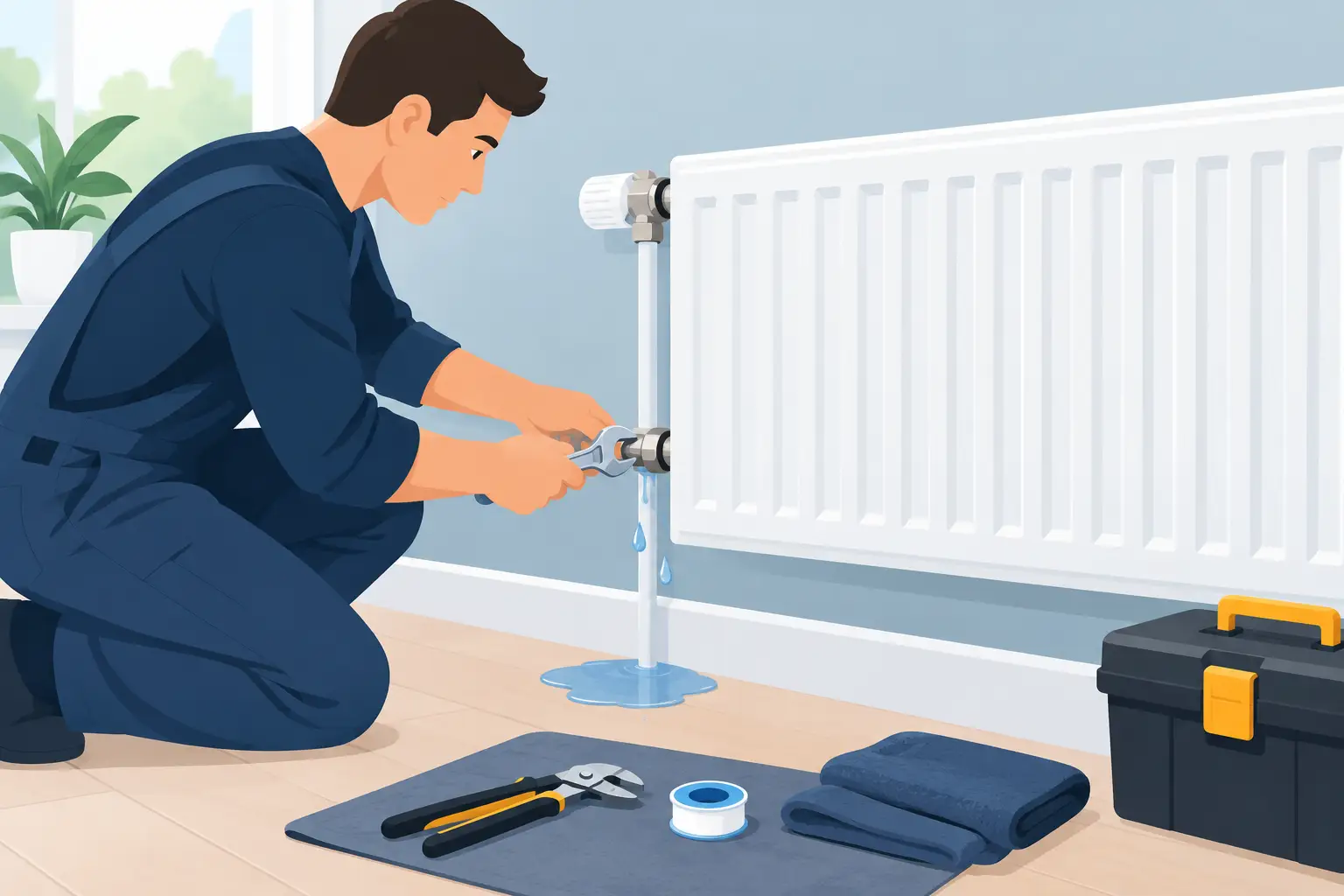
Before connecting a heat pump, the system should be checked for leaks, sticking valves, cold spots, corroded pipework and poor balancing. A powerflush may be appropriate where there is evidence of contamination, although it is not a one-size-fits-all answer. The system should be cleaned, protected with the correct inhibitor and fitted with suitable filtration where required by the design.
Pipe sizes also deserve attention. Older homes may have smaller microbore pipework, altered pipe routes or sections that have been added during previous extensions. These do not automatically rule out a heat pump, but they can affect water flow and the ability to deliver heat evenly. An experienced installer checks the system as a whole rather than treating the outdoor unit, cylinder and radiators as separate jobs.
Balancing is not an optional finishing touch
After any radiator changes, the heating system needs balancing properly. This controls the flow through each radiator so that nearer rooms do not take all the heat while bedrooms or extensions remain cool.
Heat pumps tend to run for longer, gentler periods than boilers. That can make a balanced system feel more even and comfortable, but only if the commissioning is done carefully. Thermostatic radiator valves, room thermostats and zoning should be selected and set up to work with the system, not fight against it.
What usually needs changing?
Every property is different, but the most common upgrades are selective rather than wholesale. A heat-loss survey may identify a small number of radiator replacements in colder rooms, such as north-facing bedrooms, bathrooms with external walls or a poorly insulated extension.
Larger radiators are often the simplest solution because more surface area allows enough heat to be released at a lower water temperature. This does not always mean a radiator has to become dramatically wider. A taller unit, a double-panel model or a different style of emitter can provide the required output where space allows.
Controls may need updating too. A heat pump benefits from a control strategy that responds to outdoor conditions and maintains a steady indoor temperature. Turning the heating fully off and expecting a quick burst of heat later is usually less effective than allowing the system to maintain the home gradually. Smart controls can be useful, but the priority is correct set-up and clear advice on how to use them.
Domestic hot water requires separate planning. Most heat-pump installations use a suitable hot-water cylinder, as stored water allows the system to heat efficiently. If a home currently has a combi boiler with no cylinder, space for one must be considered early in the quotation process.
A room-by-room check avoids expensive assumptions
It is tempting to judge suitability by counting radiators or looking at their physical size. That approach can be misleading. Two radiators of similar dimensions can have different outputs, and a room with the same floor area as another may lose far more heat through glazing, exposed walls or an uninsulated roof section.
A professional assessment should establish:
- the heat loss of every room
- the output of each existing radiator at the intended flow temperature
- whether pipework and circulation can support the design
- the condition and cleanliness of the current system
- the best location for the outdoor unit, cylinder and controls
This process also identifies improvements that may reduce the size of heat pump needed. Loft insulation, draught-proofing and sensible upgrades to doors or glazing can make a meaningful difference. There is a balance, though. It is rarely sensible to delay a heating upgrade indefinitely while pursuing every possible fabric improvement. The practical route is to understand the property’s current performance, plan worthwhile improvements and size the system honestly.
What homeowners should expect from a good installation
A heat pump should not be sold as a like-for-like boiler swap. The equipment, radiator circuit, hot-water provision and controls need to be designed together. The installer should explain which radiators can stay, which need changing and why, using figures that relate to your rooms rather than vague assurances.
You should also expect commissioning that confirms correct flow rates, operating temperatures, safety settings and controls. Documentation matters for future servicing, warranty support and landlords or property managers who need a clear record of work completed.
At Chalmers Plumbing & Heating, that means checking the detail before work begins, communicating clearly if upgrades are needed and leaving you with a system that has been properly commissioned rather than merely switched on.
Is keeping existing radiators worth it?
Keeping suitable radiators can reduce disruption and installation cost, especially where rooms are already decorated or pipework is difficult to access. It also avoids replacing components that are in sound condition and capable of doing the job.
The trade-off is that retaining every radiator may force the heat pump to run at a higher temperature than necessary. While that may still provide a workable system, it can reduce efficiency. Replacing a few weak links in the circuit is often better value than compromising the performance of the whole installation for years to come.
The best outcome is usually a tailored one: retain the radiators that have sufficient output, upgrade those that do not, clean and balance the system, and commission the heat pump around the way the property actually loses heat. A careful survey gives you a clear route forward and the confidence to make changes only where they will genuinely improve comfort.