How to Balance Radiators for Even Heating (Step by Step)
By Chalmers Plumbing & Heating
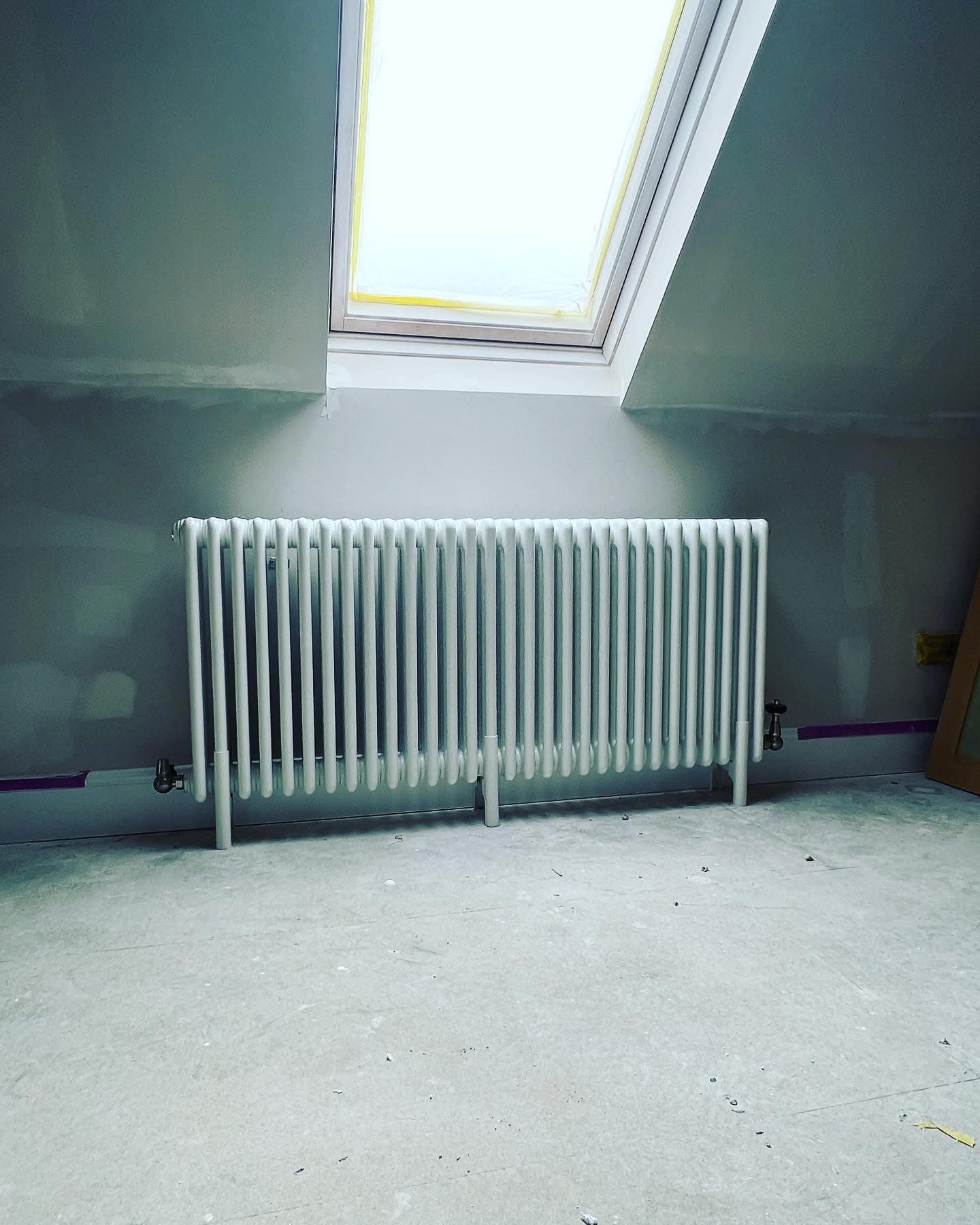
If some rooms in your Glasgow home feel like a sauna while others never quite warm up, your radiators probably need balancing. With a bit of patience and the right approach, you can often improve comfort and cut wasted energy without touching the boiler itself.
What radiator balancing actually does
Balancing is the process of adjusting how much hot water flows through each radiator so your whole heating system warms up at roughly the same rate. It is different from bleeding, which only removes trapped air.
In typical Glasgow homes, from West End tenements to 1930s semis and modern new builds, pipe runs and radiator sizes vary. Without balancing, radiators closest to the boiler often hog the heat, leaving the furthest rooms slow to warm or lukewarm at best.
When your system is properly balanced, you get more even room temperatures, a more efficient boiler, and less need to crank the thermostat up to compensate for cold spots.
What you need before you start
You do not need specialist tools for basic radiator balancing, but a few simple items will make life easier and safer.
Two adjustable spanners or grips for the lockshield valves
A radiator key for bleeding radiators if needed
A simple digital thermometer or infrared thermometer (helpful but optional)
Pen and paper or your phone to note settings and room order
Patience, as you will be making small changes and waiting between adjustments
Before you touch any valves, make sure you know where your boiler is, how to check the pressure gauge, and how to top up the pressure if you have a filling loop. Have a towel handy for any drips.
Getting your system ready
Start with the heating system switched off and cool. Open all radiator valves fully, including thermostatic radiator valves (TRVs) and lockshields, then turn the heating back on.
Set the room thermostat higher than usual so the heating runs continuously while you work. In tenements with older pipework, it may take a little longer for all radiators to heat, so give the system time.
As the radiators warm, note the order in which they heat up. The ones that get hot fastest are usually closest to the boiler or have the least resistance in the pipework.
Step by step balancing method
Step 1: Fully open TRVs
Turn all TRVs to their maximum setting. During balancing, you control flow using the lockshield valves, not the TRVs. Later on, the TRVs will go back to managing room temperature as normal.
Step 2: Identify closest radiator to the boiler
The radiator that heats first is typically closest to the boiler in terms of pipe run. This will become your reference point. Radiators that are slowest to heat are usually at the far ends of the system.
If your home has more than one branch, such as a 1930s semi with upstairs and downstairs circuits, you may need to think in terms of “closest” and “furthest” on each branch.
Step 3: Adjust the first radiator
On the hottest radiator, remove the plastic cap from the lockshield valve. This is the usually plain valve at the opposite end to the TRV. Use a spanner to gently turn it clockwise to close it fully, then open it a quarter to a half turn.
Let the system run for around 10 to 15 minutes. This restriction forces more hot water towards the other radiators, helping the cooler rooms catch up.
Step 4: Work through the radiators in order
Move to the next radiator in the heat up order. Again, close the lockshield fully, then open it slightly more than the one before. The idea is that the closer radiators are more restricted, and the ones further away are more open.
A rough guide is:
Closest to boiler: 1/4 to 1/2 turn open
Middle of the system: around 1 to 1.5 turns open
Furthest radiators: up to fully open if needed
If you have a thermometer, you can compare flow and return pipes on each radiator. Aim for a small temperature drop across each one, rather than a few radiators stealing most of the heat.
Step 5: Recheck and fine tune
Once you have adjusted every lockshield, let the heating run for at least 30 minutes. Walk around the house and feel each radiator from top to bottom. They should all be hot, with only a gentle fall in temperature on the return side.
If one room is still cooler, open that radiator’s lockshield slightly more and wait again. If a room is much hotter than the others, try closing its lockshield a tiny amount. Make small changes and always give the system time to respond.
Common issues and how to respond
Stuck or seized valves
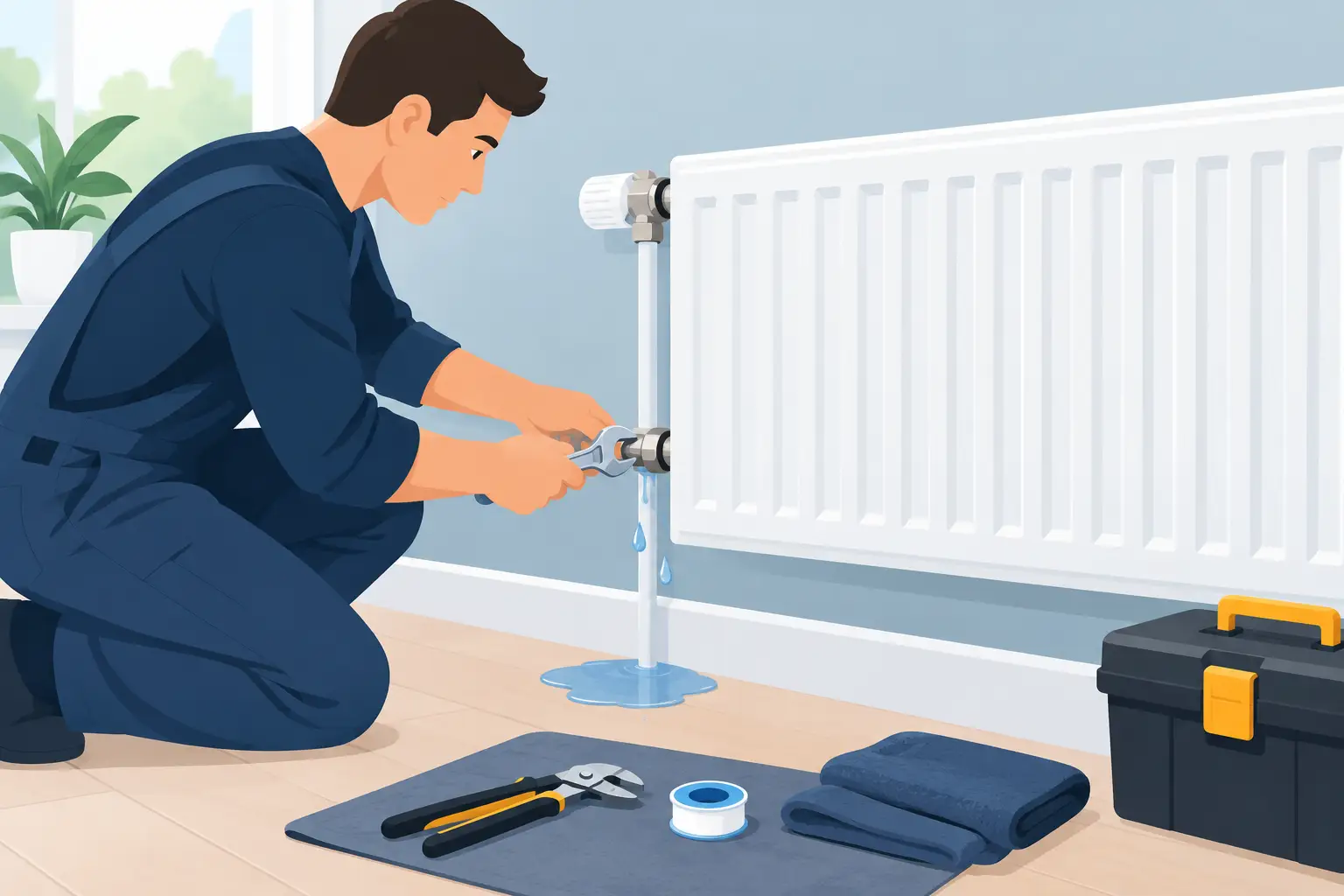
If a lockshield or TRV will not turn with gentle pressure, do not force it. Applying too much force can cause leaks or damage the valve body and pipework.
At this point, stop and contact a heating engineer. A seized valve often needs parts replaced or pipework altered, which is not a DIY job.
Noisy pipes and radiators
After balancing, you might notice hissing, gurgling, or knocking. Mild noise can be caused by trapped air or higher flow in certain sections.
Try bleeding the affected radiators carefully, watching the boiler pressure gauge as you go. If noises persist or get worse, have a professional check the system for pump speed, air problems, or incorrect pipe supports.
One radiator never warms properly
If one radiator stays stubbornly cool even after balancing, check that both valves are open and the radiator has been bled. Feel the pipes leading to it; if they are cold while others are hot, you may have a blockage or pipework issue.
Do not attempt to dismantle valves or remove radiators yourself. This can quickly lead to leaks, further blockages, or damage to your boiler.
Boiler pressure changes after bleeding
When you bleed radiators, air leaves the system and the boiler pressure can drop. If the gauge falls below the recommended range, usually around 1 to 1.5 bar when cold, you may need to top it up using the filling loop.
If the pressure keeps dropping, rises too high, or will not stabilise after topping up, switch off the heating and call an engineer. Ongoing pressure problems should always be investigated professionally.
Safety limits and when to call an expert
Basic radiator balancing is safe for most homeowners as long as you only adjust accessible valves, bleed points, and the filling loop where you understand how to use it. Never dismantle valves, remove nuts on pipe joints, or open anything that looks like part of the boiler casing.
Stop and contact a qualified heating engineer if you notice leaks, cannot turn a valve without force, or see any fault codes on the boiler. It is always better to pause and get help than risk damage to your heating system or your home.
Next steps for a healthier heating system
Balancing your radiators can make a big difference to comfort in Glasgow homes of all ages, from traditional tenements to new build flats. If you are still struggling with cold rooms, noisy radiators, or pressure issues, it may be time for a professional system health check.
The team at Chalmers Plumbing & Heating can inspect your boiler, check your central heating system, and advise on improvements such as powerflushing, upgraded controls, or replacing problem valves. To book a system health check or arrange boiler servicing or central heating support, call Chalmers Plumbing & Heating on 01413740274.