By Chalmers Plumbing & Heating
A boiler rarely picks a convenient time to stop working. It is usually during a cold spell, before guests arrive, or when a tenant reports there is no hot water. Boiler maintenance plans are designed to reduce that uncertainty by putting routine checks, service reminders and a clear response process in place before a small fault becomes a larger disruption.
For homeowners, landlords and businesses, the right plan is not simply an annual visit paid for monthly. It should be a practical arrangement that helps keep the boiler safe, correctly adjusted and properly documented, while making it easier to get help if something goes wrong.
What is included in a good boiler maintenance plan?
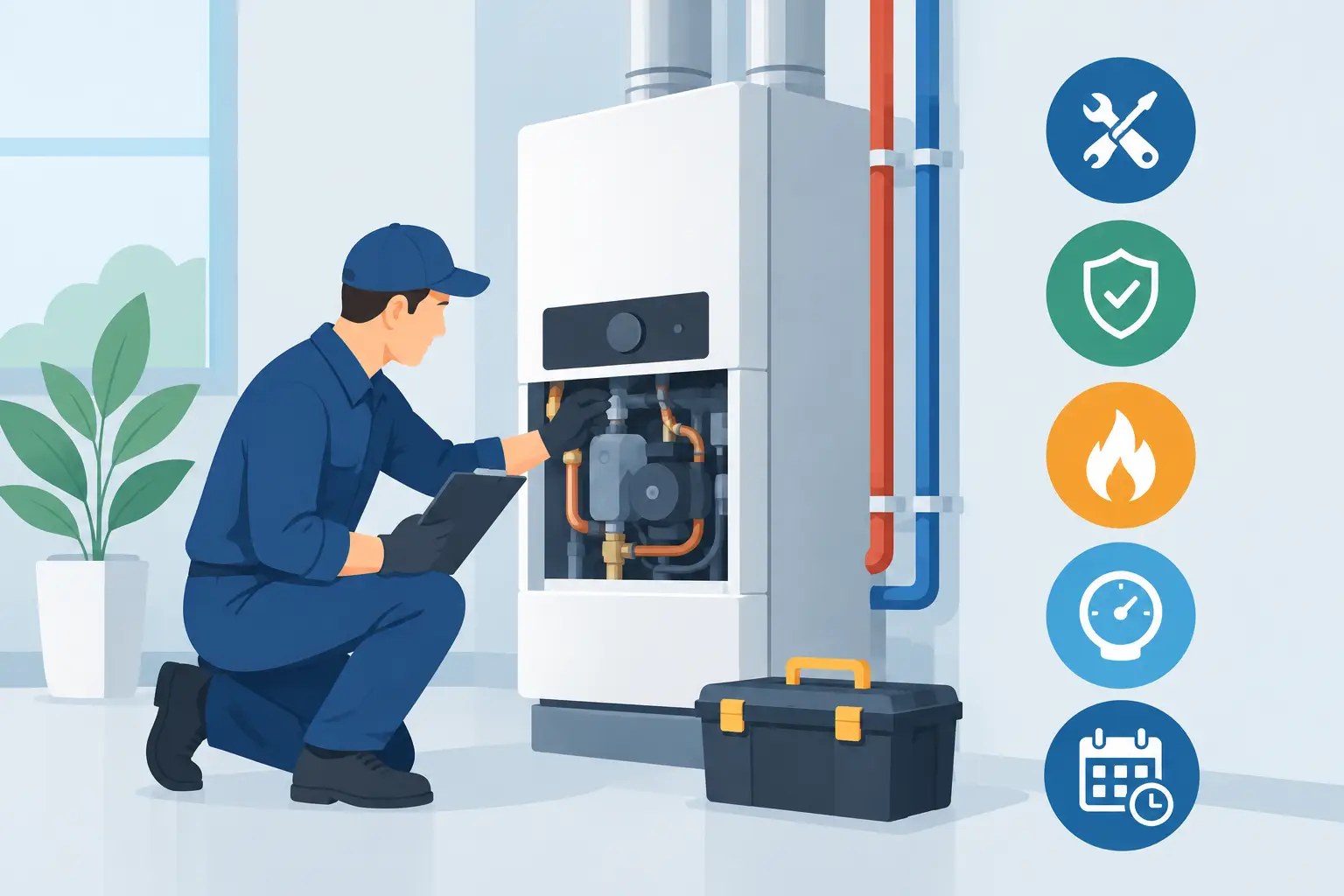
The starting point is usually an annual boiler service carried out by a Gas Safe registered engineer. This is a planned inspection of the appliance and its operation, rather than a repair visit. The engineer checks the boiler is burning gas correctly, that the flue is safe, and that key components are working as they should.
A thorough service may include checking the boiler casing and seals, controls, pressure, condensate route, ventilation where relevant, and the condition of visible pipework. The engineer will also inspect for signs of leaks, corrosion or wear that could affect reliability. If the boiler needs cleaning or adjustment in line with the manufacturer’s instructions, that should be done as part of the service.
The value is in the detail. A boiler can still produce heating and hot water while developing issues that will shorten its life, waste energy or lead to a breakdown later. Routine servicing gives an engineer the opportunity to spot those warning signs early and explain what, if anything, needs attention.
A well-run plan should also provide a service record. Digital records are particularly useful for homeowners who want proof of maintenance, landlords managing several properties, and businesses that need to show planned maintenance has been completed. Keeping this history can also support warranty requirements, although the precise terms will depend on the boiler manufacturer and installation date.
Boiler maintenance plans are not all the same
The phrase can cover several different levels of support. Some plans are centred on an annual service and reminders. Others include priority booking for faults, selected repair labour, or cover for particular boiler parts. The right option depends on the age and condition of the system, the property’s use, and how much certainty you want over future costs.
It is worth reading the scope carefully. A plan may cover the boiler but not radiators, programmer, thermostats, magnetic filters, pumps, zone valves or wider plumbing issues. It may include labour but exclude parts, or cover certain parts subject to approval. There can also be call-out limits, exclusions for pre-existing faults, and a waiting period before repair cover begins.
That does not make a maintenance plan poor value. It simply means it needs to be clear. A reputable provider should explain what is included, what requires a separate quotation, and how urgent faults are handled. Customers should not have to guess whether a loss of heating will be treated as a routine appointment or a priority call-out.
Servicing and repairs have different purposes
Annual servicing helps maintain safe, efficient operation and identify developing faults. It does not guarantee that a component will never fail between visits. Electronics, pumps, valves and fans can develop faults unexpectedly, particularly on older boilers.
Repairs are reactive work to diagnose and resolve a specific problem. A capable engineer should investigate the cause rather than repeatedly replace parts without testing. Accurate diagnosis matters because boiler faults can be linked to system water quality, poor pressure, controls, condensate issues or incorrect installation - not just the component displaying an error code.
When a plan makes particular sense
For a busy household, a plan creates a routine. Instead of trying to remember when the boiler was last serviced, you have a scheduled reminder and a record that the work has been done. This is especially helpful where the boiler is out of sight in a cupboard or loft and easy to overlook until it fails.
Landlords have a more specific responsibility. A valid annual gas safety check is required for gas appliances in rented accommodation, and tenants must be given the appropriate record. A boiler service and a gas safety check are related but not automatically identical tasks, so it is sensible to confirm exactly what visit is being arranged and what documentation will be issued.
For property managers, planned maintenance can make the administrative side simpler. A clear schedule, accessible certificates and a named contractor reduce the risk of missed dates and fragmented records. The same principle applies to small businesses, offices, shops and managed premises where loss of heating or hot water can affect staff, customers and day-to-day operation.
In Glasgow and across the surrounding area, winter demand can make prompt attendance more difficult when many households experience problems at once. Having an established maintenance relationship can make communication and booking more straightforward when help is needed.
Signs your heating system needs more than routine maintenance
A service is a sensible baseline, but it cannot correct every underlying system issue. If radiators heat unevenly, the boiler repeatedly loses pressure, or hot water temperatures fluctuate, it may be time to investigate the whole heating system.
Black sludge in system water, cold patches on radiators and noisy circulation can point to debris restricting flow. In some cases, a professional powerflush, filter clean or chemical treatment may be recommended. If a property has been extended or insulated, the existing boiler may no longer be correctly sized for the heating demand. A heat-loss check is more reliable than choosing a larger boiler by assumption.
Controls also make a difference. A boiler in good order can still waste energy if the programmer is poorly set, rooms are overheated or the thermostat is in the wrong location. Smart controls and sensible zoning can improve comfort, but they need to be set up properly for the property and the people using it.
Questions to ask before choosing a plan
Before committing, ask who will carry out the work and whether they are Gas Safe registered for the appliance involved. Check how the annual appointment is arranged, what evidence you receive afterwards, and whether the provider can work on your boiler’s make and model.
You should also ask how breakdowns are prioritised, whether labour and parts are included, and what exclusions apply. If a boiler is already showing a fault code, leaking or unreliable, arrange a diagnosis first. A maintenance plan should not be treated as a shortcut around a known repair requirement.
For older boilers, compare the cost of ongoing repairs with the likely benefit of replacement. There is no fixed age at which every boiler must be changed. Some older appliances remain dependable with proper care, while others become increasingly expensive to keep running. An honest assessment should look at repair history, parts availability, efficiency, safety and the condition of the wider system.
The benefit of one accountable contractor
Heating maintenance works best when the engineer has a clear picture of the system over time. Service records, previous fault notes, commissioning details and any repairs all help with faster diagnosis. They also avoid the common frustration of having different tradespeople give conflicting advice without taking ownership of the outcome.
Chalmers Plumbing & Heating approaches planned boiler care with the same focus used for installations and repairs: turn up as arranged, explain findings in plain language, complete the checks properly and provide clear records. Where further work is needed, it should be set out clearly rather than hidden behind vague recommendations.
A boiler maintenance plan should give you more than a date in the diary. It should give you confidence that someone is keeping an eye on the appliance, the paperwork and the practical steps needed to keep heating and hot water dependable when you need them most.