
Benefits of Power Flushing Radiators Explained
By Chalmers Plumbing & Heating
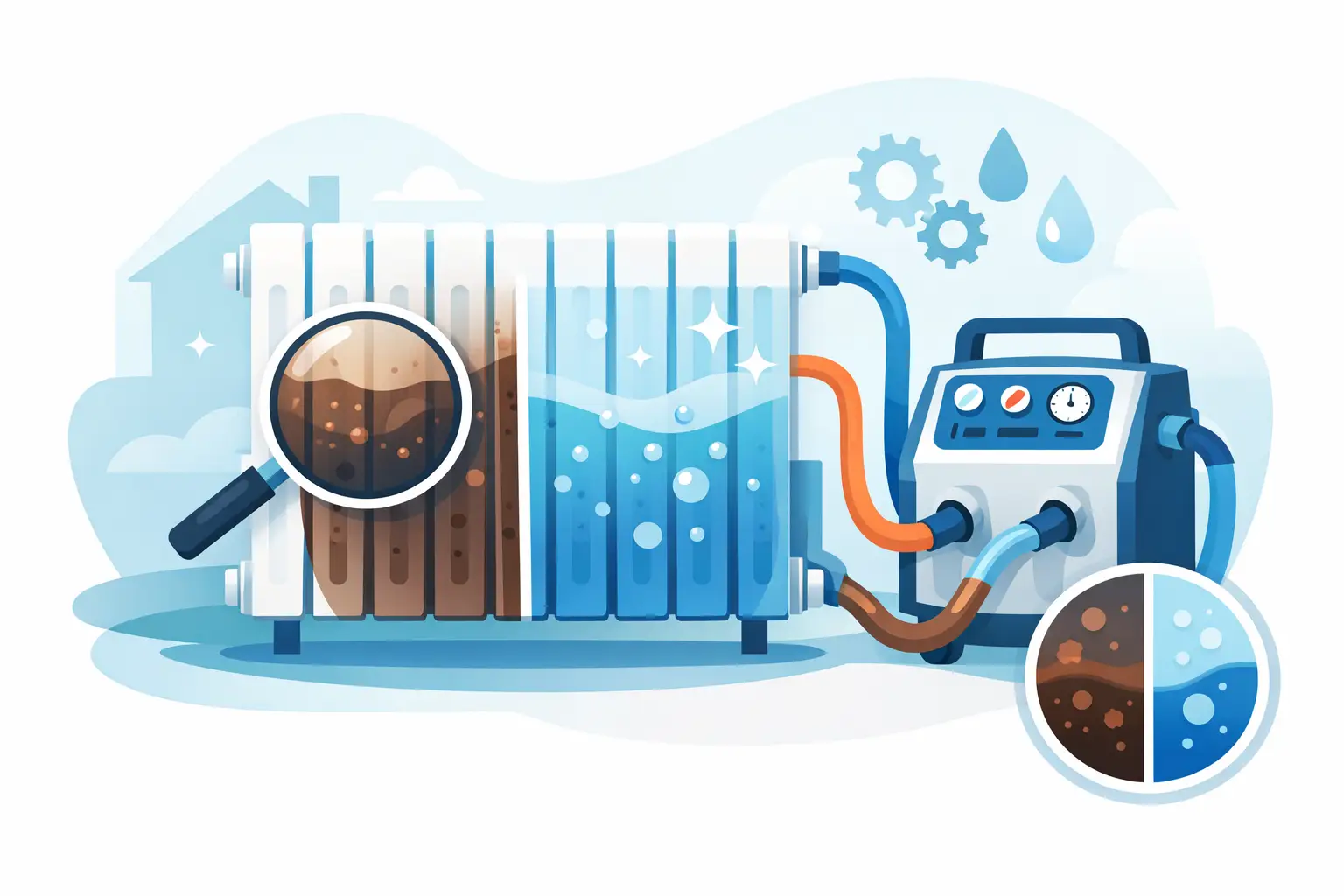
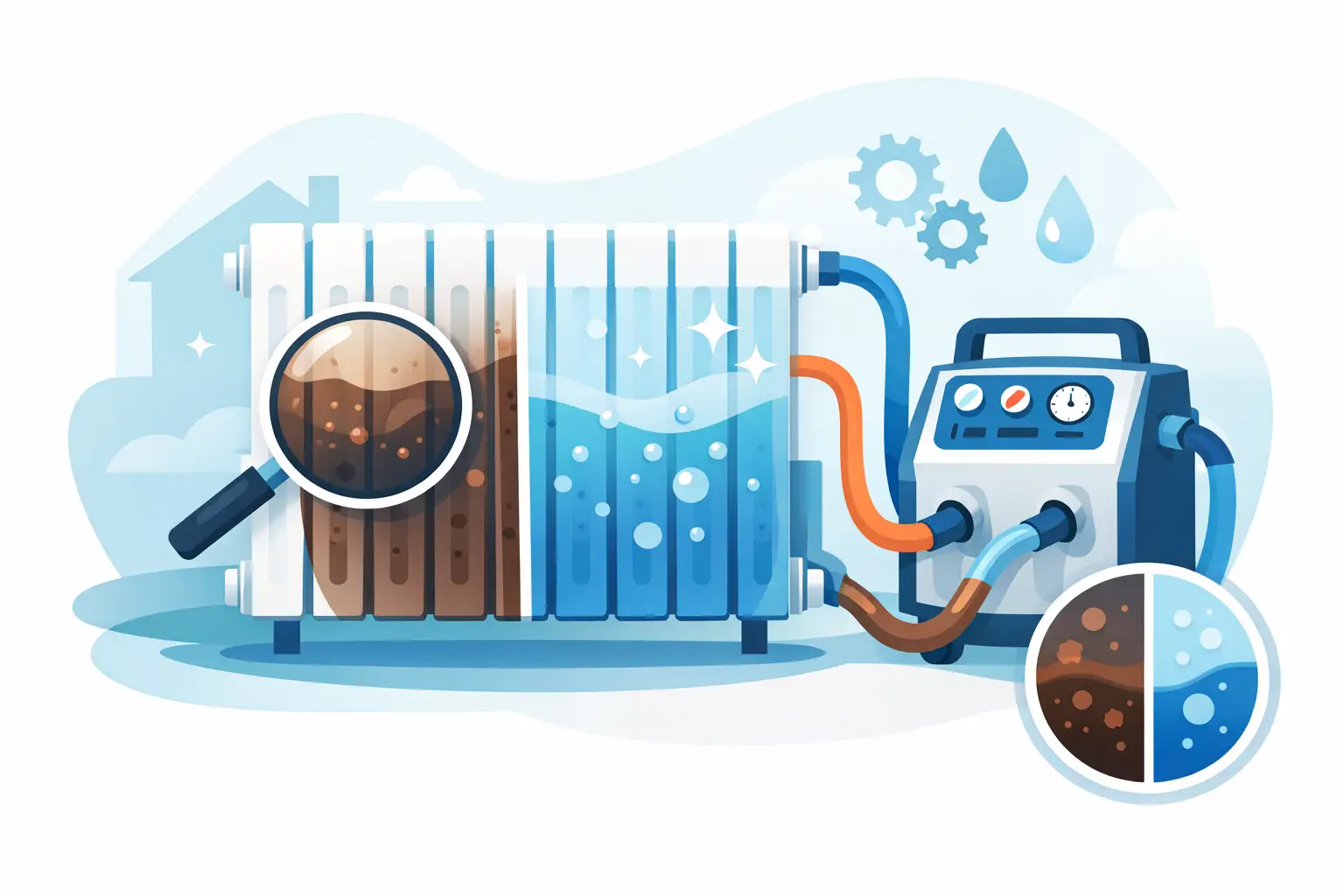
A radiator that is hot at the top but cold along the bottom is rarely just an annoyance. It often points to sludge circulating through the central-heating system, restricting flow and making the boiler work harder than it should. The benefits of power flushing radiators can include more even heat, faster warm-up times and better protection for valuable heating components, but only when it is the right solution for the fault.
For homes, rented properties and commercial premises across Glasgow, poor radiator performance can quickly become a comfort issue and an avoidable running-cost problem. A professional diagnosis matters first. Not every cold radiator needs a power flush, and a flush cannot cure a failed pump, undersized boiler or faulty radiator valve.
What a power flush does to a heating system
A power flush is a controlled clean of a wet central-heating system. An engineer connects specialist flushing equipment to the system and circulates water and cleaning chemicals at a higher flow rate than the boiler pump can achieve alone. The process is designed to lift and remove the black, magnetite-rich sludge, rust particles and other debris that settle in radiators, pipework and boiler components over time.
Each radiator may be worked through individually to shift deposits from areas where flow has become restricted. The system is then thoroughly rinsed until the water runs clear, refilled, treated with the correct inhibitor and checked for proper operation. The aim is not simply to make one radiator warmer. It is to restore clean, consistent circulation throughout the system.
Modern boilers have narrow waterways and efficient heat exchangers, so they are particularly vulnerable to debris from an older or poorly maintained system. A clean system gives the boiler a far better environment in which to operate.
Benefits of power flushing radiators and pipework
The most noticeable change after a successful power flush is usually improved heat distribution. When sludge lies at the bottom of radiators, hot water cannot circulate properly through the panel. Rooms may take longer to heat, and people often compensate by turning up the thermostat or leaving heating on for longer. Removing the obstruction allows radiators to heat more evenly and respond more quickly to demand.
That improved circulation can also reduce strain on the boiler and pump. If water is struggling to move through blocked pipework, the system has to work harder to deliver the same level of comfort. A flush cannot promise a fixed reduction in energy bills, as savings depend on the boiler, controls, insulation and how the property is used. However, restoring circulation can stop a dirty system from wasting energy unnecessarily.
Power flushing can help reduce several common symptoms, including noisy radiators, banging or kettling sounds from the boiler, repeated cold spots and a system that needs frequent bleeding. These symptoms have different possible causes, so an engineer should investigate before recommending work. Where contamination is the underlying cause, clearing it can make the whole heating system quieter and more dependable.
There is a longer-term benefit too. Sludge and corrosion debris can contribute to pump wear, blocked valves and problems within the boiler heat exchanger. These are components that homeowners and landlords would rather not replace prematurely. Flushing is a maintenance measure, not a guarantee against future breakdowns, but it can help protect the system when paired with the correct inhibitor and regular servicing.
For landlords and property managers, better radiator performance can mean fewer tenant reports of cold rooms and a clearer record that the heating system has been properly maintained. In offices, shops and larger properties, uneven heating can affect comfort across several rooms, making early investigation worthwhile before a small circulation issue becomes a wider repair job.
Signs your system may need a power flush
The strongest indication is a pattern rather than one isolated fault. If several radiators are cooler at the bottom, take a long time to heat or remain partly cold even after bleeding and balancing, sludge is a realistic possibility. Discoloured water released when a radiator is bled or removed is another useful clue.
Other warning signs include a boiler that regularly cuts out, unusually noisy operation, a circulating pump that is working harder than expected, or radiators that need constant attention. A heating engineer may also find debris when inspecting a magnetic filter or carrying out work on the system.
A new boiler fitted to old radiators and pipework deserves particular care. Installing an efficient boiler onto a contaminated system can put the new appliance at risk from day one. Depending on the condition of the system, a thorough clean may be recommended before or during installation, followed by inhibitor and a magnetic filter where appropriate.
There are also times when a flush is not the first answer. A single cold radiator may have trapped air, a stuck thermostatic valve or a balancing issue. Low system pressure can indicate a leak. If the boiler has a fault code, the cause could be electrical, mechanical or related to combustion rather than water quality. Proper fault-finding avoids paying for a treatment that does not address the real problem.
What professional power flushing involves
A professional job starts with an assessment of the boiler, radiators, controls, pressure and visible condition of the system. This helps establish whether flushing is suitable and whether there are risks, such as old valves or radiators that may already be weakened by internal corrosion.
The engineer isolates the boiler where necessary and connects the flushing machine at a suitable point. Cleaning solution is circulated through the heating circuit, with radiators treated in turn to encourage deposits out of the system. The dirty water is safely discharged and fresh water is used to rinse the system until it is clear.
Once clean, the system is refilled, vented and dosed with inhibitor to slow future corrosion. Radiators should then be balanced, heating controls checked and the boiler run to confirm consistent heat. This commissioning stage matters. A power flush should leave the system operating properly, not simply full of new water.
The work can take several hours and, on larger or heavily contaminated systems, may take most of a day. The condition, number of radiators and access to the system all affect the timescale. A reputable engineer should explain what they have found, what work is proposed and whether any separate repairs are required before proceeding.
Power flushing versus a chemical clean
A chemical clean and a power flush are related but not identical. A chemical clean uses cleaning chemicals to break down contamination and may be suitable for mild debris or as part of routine work. A power flush combines chemical treatment with high-flow circulation and is generally more effective where there are established cold spots, significant sludge or poor circulation across the system.
The right choice depends on the system's age, symptoms and condition. Older systems can contain fragile components, and an honest assessment may identify a leaking radiator, failed valve or damaged pipework that needs repair rather than aggressive cleaning. That is why power flushing should never be sold as a one-size-fits-all add-on.
Keeping radiators clean after a flush
After investing in a flush, protecting the result is straightforward. The system should contain the right concentration of inhibitor, which is checked during annual boiler servicing. A magnetic filter can capture circulating metallic debris before it reaches sensitive boiler parts, and it should be cleaned as part of planned maintenance.
Avoid repeatedly topping up a sealed heating system without finding out why pressure is dropping. Every top-up introduces fresh water and oxygen, which encourages corrosion. If a radiator needs bleeding often, pressure keeps falling or water looks dirty again soon after a flush, arrange an inspection rather than treating the symptom.
Chalmers Plumbing & Heating approaches power flushing as part of a wider heating diagnosis. The practical question is not whether a flush sounds beneficial, but whether it will restore your system's performance and protect the equipment you rely on.
If your radiators are cold in places, your boiler is noisy or rooms are taking too long to warm up, a professional assessment can give you a clear answer. Addressing contamination early is often simpler than waiting for restricted circulation to lead to a boiler fault on a cold Glasgow morning.