By Chalmers Plumbing & Heating
A boiler that stops working during a cold snap can be worrying, particularly when the heating and hot water were fine the day before. If your boiler displays a fault code or has gone into lockout during freezing weather, you may need to thaw frozen condensate pipes. This is a common issue with modern condensing boilers, and it can often be resolved safely at home if the frozen section is accessible.
The key is to use gentle heat, avoid damaging the plastic pipework and know when the problem needs an engineer rather than another reset.
Why condensate pipes freeze
A modern condensing boiler recovers extra heat from its flue gases. As part of that process, it produces mildly acidic water called condensate. This drains away through a small plastic pipe, usually white or grey, which may run outside before entering a drain.
When temperatures fall below freezing, condensate can freeze in an exposed outside section, at a bend or where the pipe enters the drain. Once blocked, water backs up towards the boiler. The boiler’s safety controls then stop it operating to prevent water damage inside the appliance.
You may notice a gurgling sound from the boiler before it locks out. Some boilers show a fault code, while others display a warning light. The exact message varies by manufacturer, so check the boiler handbook if you have it. A frozen condensate pipe is more likely if the fault appeared overnight or during a sharp frost, but it is not the only possible cause of a boiler failure.
How to thaw frozen condensate pipes safely
Before starting, identify the condensate pipe. It is generally a narrow plastic pipe leading from beneath the boiler. In many homes it runs through an external wall and down towards a drain, waste pipe or gully. Do not remove the boiler casing or interfere with any internal components.
If the external pipework can be reached safely from ground level, switch the boiler off at its controls. Let the boiler cool if it has been running, then inspect the visible pipe. The ice may be obvious, but it is often inside a low section, elbow or narrow connection at the drain.
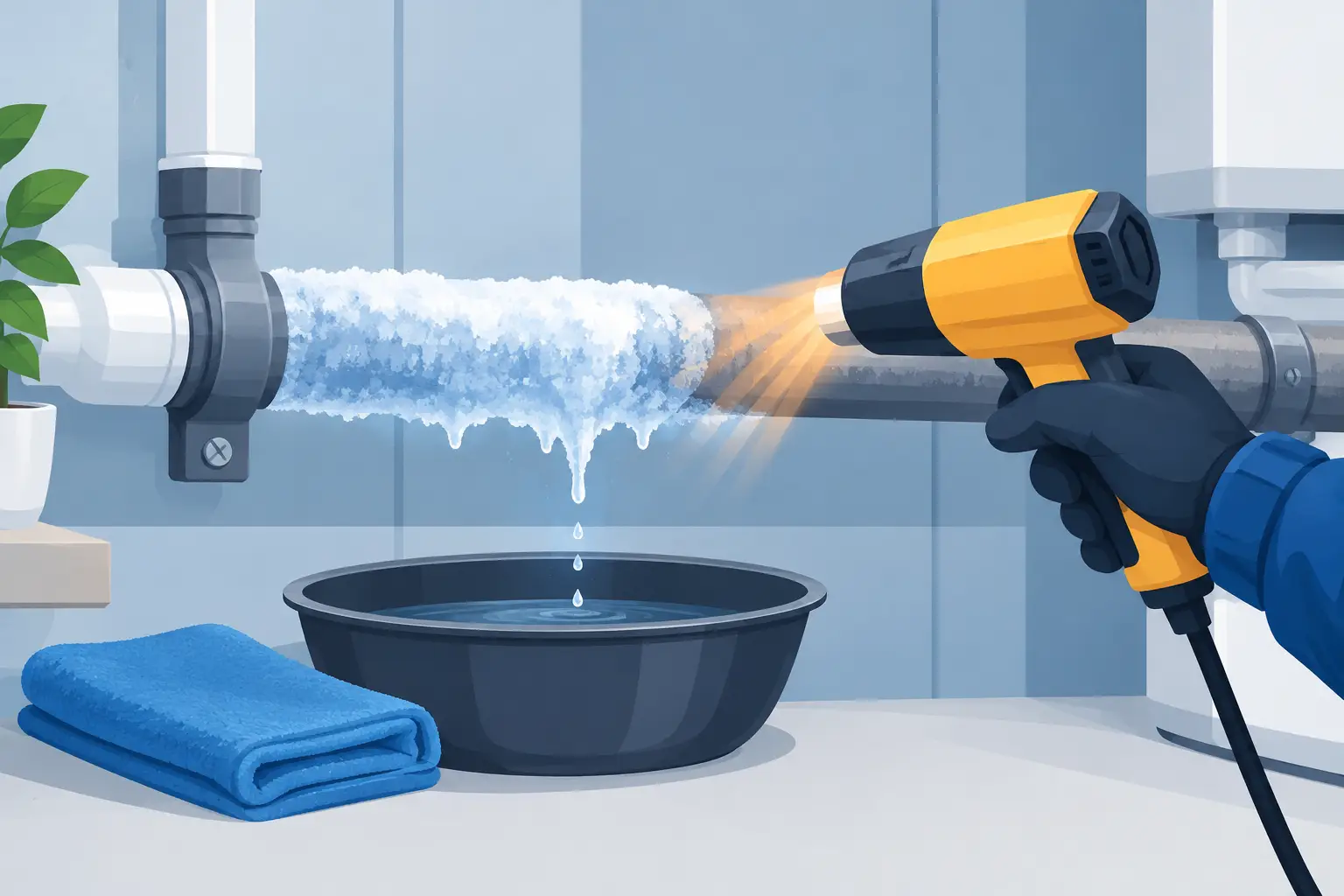
Use warm, not boiling, water. A hot water bottle held against the pipe is usually the gentlest approach. You can also wrap the pipe with a warm damp cloth, replacing it as it cools. If needed, pour warm water slowly over the affected section, catching or directing runoff carefully to avoid creating an icy path.
A hairdryer on a low setting can work where there is a safe, dry electrical supply and the appliance can be kept well away from water. Keep it moving rather than concentrating heat in one place. In most cases, patience is safer than trying to speed the job up.
Never use a blowtorch, heat gun, naked flame or boiling kettle water. Sudden intense heat can split plastic pipework, damage joints or create a burn risk. Do not chip at the pipe with a screwdriver, knife or other sharp tool. A small crack can lead to a leak that only becomes obvious once the weather improves.
Once the blockage has thawed, you may hear water running into the drain. Check for visible leaks around the pipe and beneath the boiler. Then restart or reset the boiler in line with the manufacturer’s instructions. Most boilers have a reset button, but it is best not to keep resetting repeatedly. One reset after the condensate has cleared is reasonable. If the boiler does not restart, or locks out again, stop there and arrange a professional diagnosis.
When not to tackle it yourself
Do not attempt to thaw pipework that is high up, hidden behind fixed panels, located near unsafe access or connected to a damaged drain. It is also time to call an engineer if you can see a split pipe, smell gas, notice a water leak from the boiler, or have no confidence that the condensate pipe is the cause.
For landlords and property managers, a reported boiler lockout should be treated promptly. Occupiers may be unable to distinguish a frozen condensate line from a pressure issue, ignition fault or a more serious boiler problem. A proper check avoids leaving someone without reliable heating and hot water unnecessarily.
Signs the fault may be something else
Freezing weather can make the condensate pipe the obvious suspect, but boilers fail for several reasons. If the pipe is clear and the boiler still will not run, the issue could involve low system pressure, a frozen external water supply, an electrical fault, ignition components or a fault within the boiler itself.
Low pressure is commonly indicated on the boiler display or pressure gauge. Many sealed heating systems should sit around 1 to 1.5 bar when cold, although the correct setting depends on the appliance and installation. Do not keep topping up pressure without understanding why it has fallen. Frequent pressure loss can point to a leak, faulty expansion vessel or another fault that needs attention.
Likewise, a boiler that starts but produces no heat may have a control, pump or circulation issue rather than a condensate blockage. An accurate diagnosis matters. Replacing parts or carrying out repeated resets without confirming the cause can turn a straightforward repair into a longer disruption.
Preventing a frozen condensate pipe next winter
The best prevention depends on the route, size and condition of the existing pipe. Older installations sometimes have long external runs or small-diameter pipework that freezes more easily. Current good practice aims to keep external pipework short, use suitably sized pipe and provide proper insulation where an outside route cannot be avoided.
Start by looking at the exposed section before winter. Check that insulation is intact, joints are secure and the pipe has not been knocked loose. Insulation helps, but it cannot fully protect a poorly designed external run through prolonged freezing conditions. If your pipe regularly freezes, it is worth having the route assessed rather than accepting it as a yearly inconvenience.
A heating engineer may be able to reroute the condensate internally, reduce the external length, improve falls to the drain or alter the pipe size where appropriate. The right solution depends on the boiler location, available drainage and the property layout. A flat, a traditional tenement conversion and a commercial unit can each present different access and drainage constraints.
During severe weather, keeping the heating on a low, steady setting can help protect the wider heating system. This will not guarantee that an exposed condensate pipe will not freeze, but it reduces the risk of the home becoming very cold and can help spot faults before they become urgent. If you are leaving a property empty, make sure any frost-protection settings are enabled and that the boiler has electrical and gas supply.
A professional repair should address the cause
If frozen condensate pipework has become a recurring problem, the solution should be more than a quick thaw. An engineer should inspect the route, identify where water is collecting or freezing, check that the boiler drains correctly and explain the practical options clearly.
At Chalmers Plumbing & Heating, we assess boiler faults as a complete system issue, not simply the message on the display. That means checking the condensate arrangement alongside boiler operation, heating pressure and visible pipework so that the recommended repair suits the property.
A carefully thawed pipe may get your heating back on the same day. If it freezes again every winter, however, a properly planned alteration is the safer way to protect your boiler, your property and your peace of mind.