Top Causes of Dripping Taps and What to Do
By Chalmers Plumbing & Heating
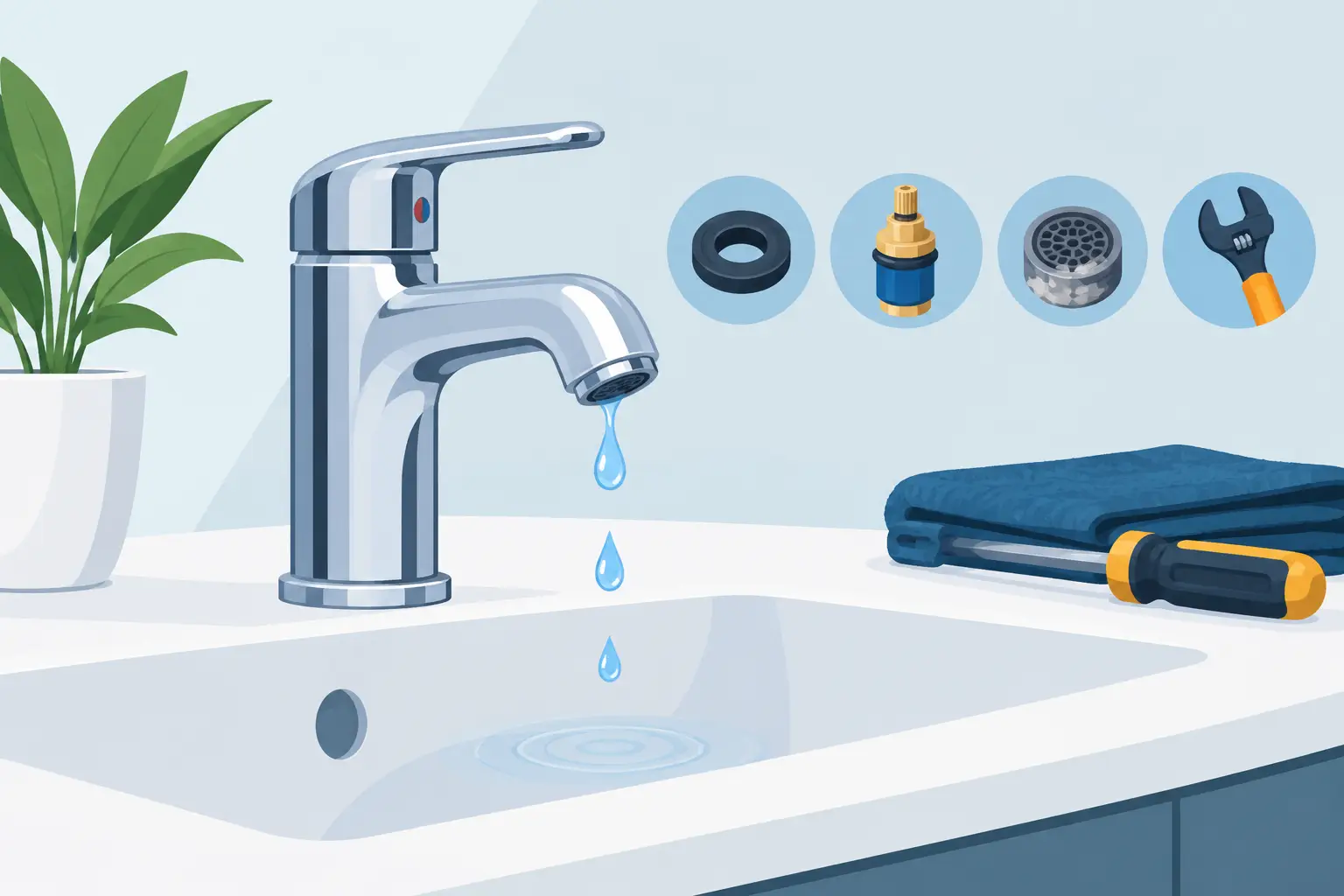
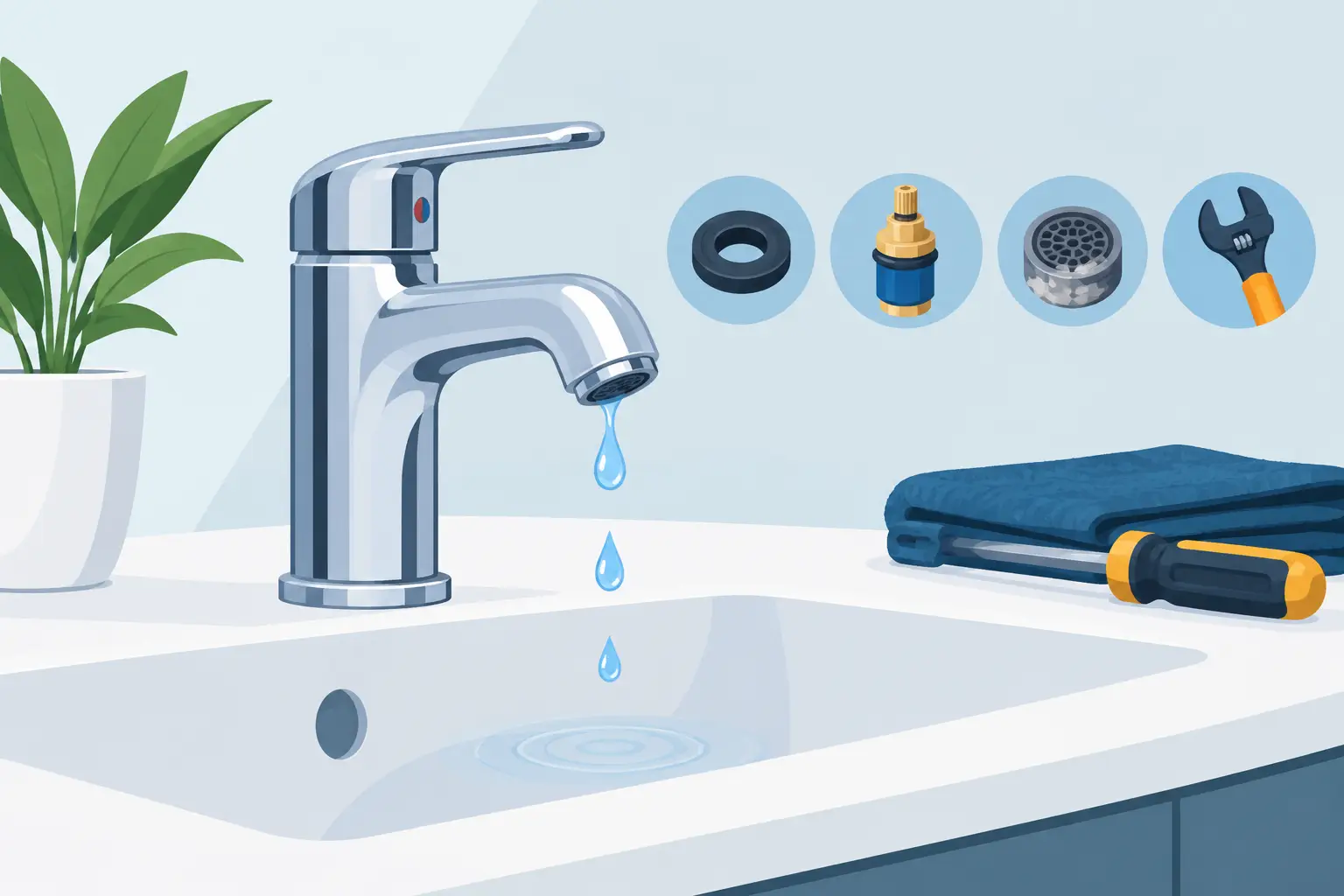
A tap that drips once every few seconds can be easy to ignore, particularly when it is in a utility room or bathroom. But the top causes of dripping taps are usually signs that a small working part has worn, loosened or been affected by debris. Left alone, that steady drip wastes water, can stain a basin and may develop into a more difficult leak around the tap base or beneath the sink.
The good news is that most dripping taps are repairable. The right repair depends on the type and age of the tap, the condition of its internal components and whether the issue is confined to the spout. A proper diagnosis avoids fitting the wrong part, damaging a tired fitting or masking a fault that will return shortly afterwards.
The top causes of dripping taps
A worn washer in a traditional tap
Older pillar taps and many traditional mixer taps use a rubber or fibre washer. When the tap is turned off, that washer presses against the valve seat to stop the flow of water. Over time, repeated tightening flattens, hardens or splits the washer, allowing a small amount of water through.
This is one of the most familiar causes of a drip from the end of the spout. The tap may also need more force to shut off than it once did. Continually tightening it is not the answer: it can wear the washer faster and damage the seat it closes against.
A new washer can be a straightforward repair when the valve body and seat are in sound condition. However, taps vary in size and design, so fitting an approximate washer rather than the correct one often leads to another call-out sooner than expected.
A failed ceramic cartridge
Many modern lever taps use ceramic cartridges rather than compression washers. Inside the cartridge, two closely fitted ceramic discs move over each other to control the water flow. They are durable, but grit, wear and internal damage can stop them sealing fully.
A cartridge fault can produce a persistent drip even when the lever is fully closed. You may also notice that the handle feels loose, stiff or inconsistent, or that the temperature and flow are harder to control. Unlike a washer, a ceramic cartridge is specific to the tap make and model. Correct identification matters, particularly with concealed or high-quality mixer taps where an unsuitable replacement can create further problems.
Damaged O-rings and seals
Not every tap leak comes from the spout. If water appears around the handle, runs down the body of the tap or gathers at its base, an O-ring or seal may be worn. These small rubber components prevent water escaping around moving parts, but they can deteriorate with age or become displaced during use.
This type of leak can look minor at first. In reality, water may be reaching the worktop, vanity unit or cupboard below. Timber units can swell, silicone seals can fail and hidden moisture can lead to staining or mould. Dealing with it early is generally far simpler than repairing the surrounding damage.
A worn or rough valve seat
The valve seat is the fixed surface inside a traditional tap that the washer closes against. If it becomes pitted, corroded or scratched, even a brand-new washer may not create a watertight seal. This is why replacing a washer does not always cure a dripping tap.
Valve seats can deteriorate gradually, especially on older fittings. In some cases, a plumber can reface the seat to create a smooth sealing surface. In others, the tap is too worn or replacement parts are no longer practical, making a new tap the more dependable option.
Debris in the tap or pipework
Small particles of grit, scale, metal or installation debris can lodge inside a tap cartridge or valve. It only takes a tiny obstruction to prevent a seal from closing properly. This is more likely after plumbing work, a water interruption or changes to pipework, though it can occur in any system over time.
The drip may start suddenly rather than developing slowly. Sometimes the flow is also uneven, or the tap spits when first opened. The fitting may need to be dismantled, cleaned and reassembled with the correct seals. If debris is recurring, it is worth checking the wider plumbing system rather than repeatedly repairing the tap alone.
Loose internal parts or a worn handle mechanism
A tap handle transfers your movement to the valve or cartridge inside. With regular use, its retaining screw, spindle or headgear can loosen or wear. The handle may turn further than normal, wobble, or no longer feel as though it reaches a firm off position.
Occasionally, tightening a fixing is all that is required. More often, a worn spindle or headgear needs replacing to restore a reliable shut-off. Forcing a loose or stiff handle risks snapping a component or cracking the tap body, particularly on older fittings.
Excessive water pressure
High water pressure does not always cause a dripping tap on its own, but it can expose a weak washer, cartridge or seal. It can also make taps noisy, create a sharp bang when they are closed and put unnecessary strain on flexible hoses and appliance valves.
If several taps are noisy or dripping, or if the problem returns soon after repair, pressure should be considered as part of the diagnosis. The solution may involve checking the incoming supply and, where appropriate, fitting or adjusting pressure-control equipment. The best approach depends on the property and its plumbing arrangement.
When a dripping tap needs more than a quick repair
A slow drip from one otherwise sound tap may only need a replacement washer or cartridge. There are situations, however, where a closer inspection is sensible. Water under the sink, corrosion around pipe connections, a cracked tap body, a loose basin-mounted fitting or repeated failure after DIY repairs can all point to a larger issue.
The same applies to mixer taps that are difficult to isolate, particularly where there are no accessible service valves beneath the basin. Turning off the wrong supply or attempting to dismantle a seized fitting can leave a home without water or cause a leak that cannot be stopped quickly.
Landlords and property managers should also treat reported drips as maintenance work rather than a cosmetic annoyance. Apart from water use, a neglected leak can damage a tenant's cupboard, flooring or worktop. A documented repair, using suitable parts, helps prevent a minor report turning into a more expensive remedial job.
Can you repair a dripping tap yourself?
Some homeowners are comfortable changing a washer, provided they can isolate the water supply, identify the tap type and access the internals without forcing anything. Before starting, plug the waste so small screws cannot disappear down the drain, protect the tap finish with a cloth and make sure both hot and cold supplies are properly isolated where relevant.
The trade-off is that taps are not as universal as they appear. Ceramic cartridges come in different diameters, heights, spline patterns and opening directions. Older valves can be seized, and decorative finishes mark easily. If the exact replacement is unavailable, the valve seat is damaged, or water is leaking around the base, professional repair is usually the safer route.
Never apply excessive force to a tap connected to ageing pipework. A broken connection beneath a basin can release far more water than the original drip, especially if the isolation valve does not close fully.
What a professional tap repair should include
A dependable repair starts with identifying where the water is escaping: from the spout, around the handle, at the base or from pipework below. The supply is isolated, the fitting is dismantled carefully and the condition of the washer, cartridge, seals, valve seat and connectors is checked.
The repair should use correctly matched components rather than a temporary substitute. Once reassembled, the tap needs testing at normal operating pressure, with checks for drips, smooth operation and any seepage beneath the basin or sink. If replacement is the sensible option, the existing tap arrangement, mounting hole, water pressure and condition of the supply valves should all be considered before a new fitting is installed.
For homes and managed properties across Glasgow, Chalmers Plumbing & Heating can assess dripping taps as part of a planned plumbing repair, explain the cause clearly and carry out the work with the surrounding area protected and tested on completion.
A dripping tap is rarely an emergency, but it is rarely improved by waiting either. Arrange a repair while the fault is still small, and you are far more likely to protect the fitting, the surfaces around it and the plumbing beneath.