Why Is My Boiler Losing Pressure? Causes and Fixes
By Chalmers Plumbing & Heating
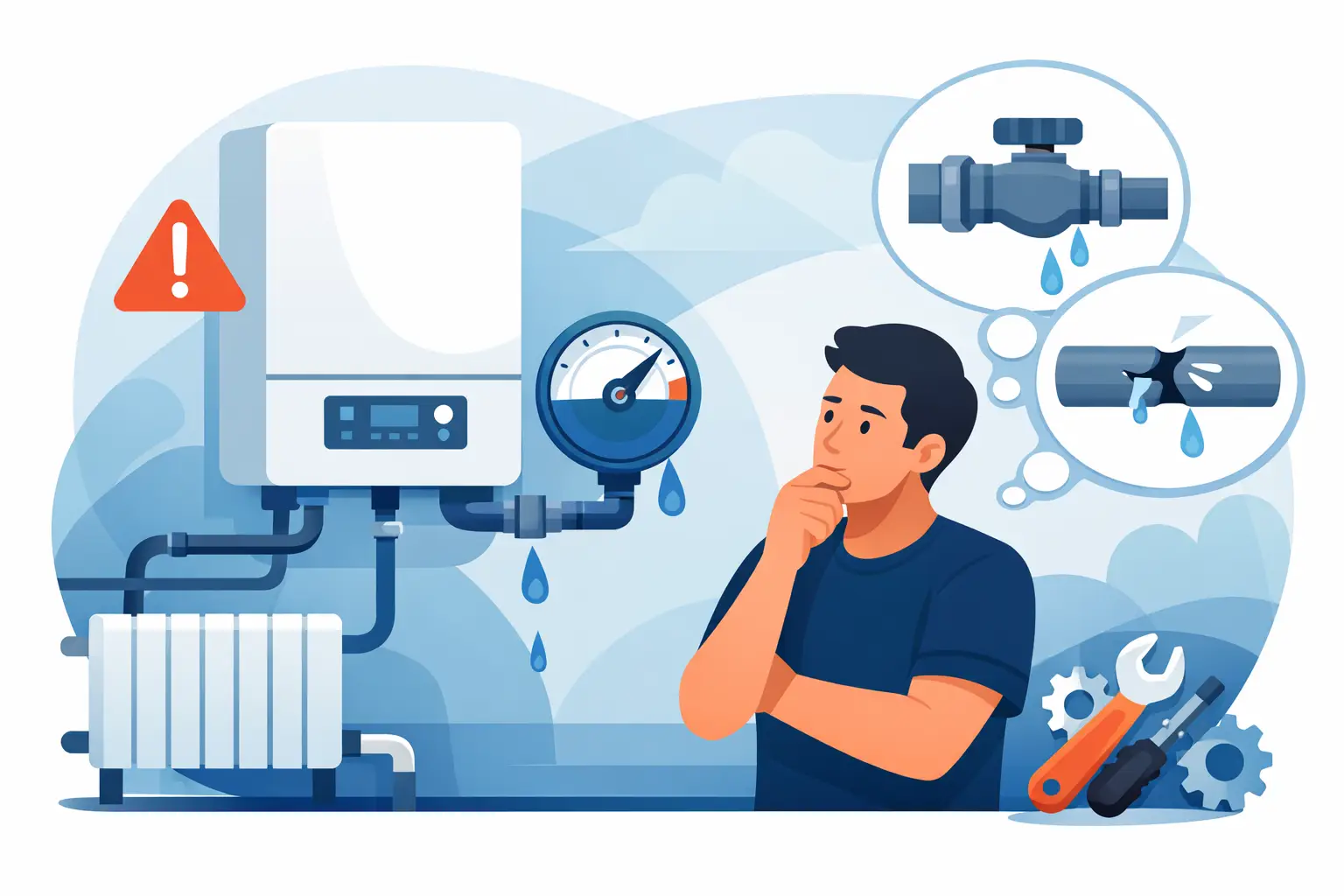
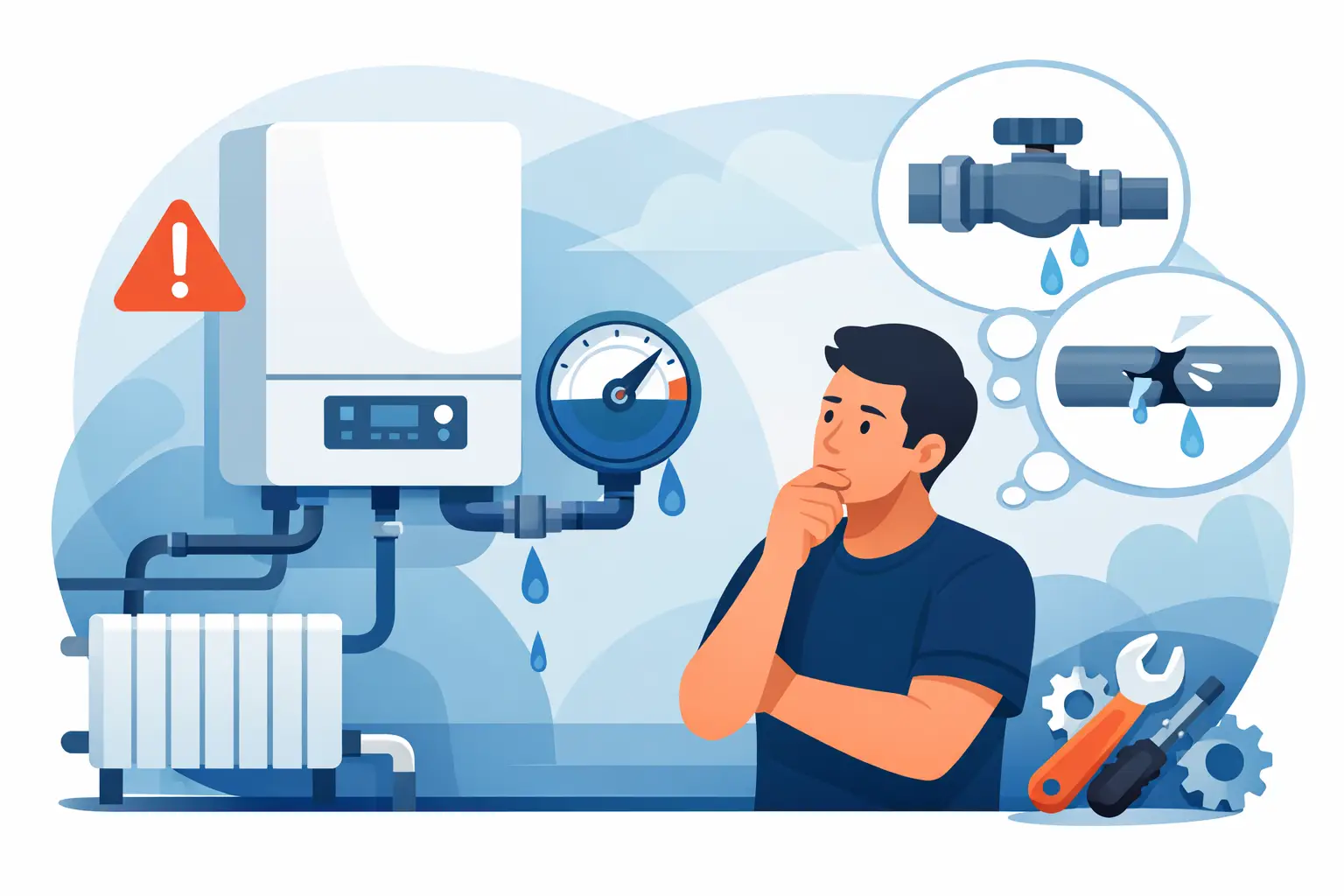
A boiler pressure gauge dropping from its normal setting can be unsettling, particularly when you rely on it for heating and hot water. If you are asking, why is my boiler losing pressure, the short answer is that water is leaving a sealed heating system, either through a visible leak, a component designed to release excess pressure, or a fault that needs attention.
A small pressure drop after bleeding a radiator is normal. Repeated pressure loss is not something to ignore or keep correcting by topping up the system. It can lead to poor heating performance, boiler lockouts and, over time, damage to parts inside the boiler. The good news is that a methodical check usually narrows down the cause quickly.
What boiler pressure should be
Most modern sealed central-heating systems should sit at around 1 to 1.5 bar when cold. Your boiler manual and the marker on the gauge are the best guide, as the exact recommended pressure can vary by manufacturer and system design.
When the heating is running, pressure naturally rises as the water warms up. A modest increase is expected. What is not expected is pressure climbing close to 3 bar, then falling very low once the system cools. That pattern often points to an expansion vessel or pressure relief valve issue.
If the gauge is below about 1 bar, many boilers will stop working to protect themselves. You may see a fault code, lose heating or find that hot water is intermittent. Repressurising may restore operation temporarily, but it is worth establishing why the pressure fell in the first place.
Why is my boiler losing pressure repeatedly?
The most common explanation is a water leak somewhere on the heating system. That leak is not always obvious. Pipework may run beneath floorboards, behind boxing or within walls, while a small leak can evaporate on a hot radiator pipe before it creates a noticeable puddle.
Start with the accessible parts of the system. Check around radiators, radiator valves, towel rails, exposed pipe joints and the boiler itself for moisture, staining, corrosion or white residue. Look at the floor beneath each radiator valve and inspect any visible joints around cupboards or service areas. A damp patch, rusty valve, or green and white deposits around copper pipework can all be useful clues.
Do not assume the boiler is at fault simply because the pressure is low. A leaking radiator valve in a spare room can have exactly the same effect. Equally, do not dismiss a small leak because it seems minor. A system that needs topped up every few days or weeks is telling you that something needs repaired.
A leaking pressure relief valve
A pressure relief valve is a safety device. It opens to discharge water if system pressure becomes too high, protecting the boiler and pipework. It is commonly connected to a copper pipe that exits through an outside wall.
If that pipe is dripping or has signs of regular water discharge, the valve may have opened because pressure rose too high. Occasionally, the valve does not reseat cleanly afterwards and continues to pass water. In other cases, the underlying cause is a failed or incorrectly charged expansion vessel.
This is not a part to cap off, bypass or alter. It is an essential boiler safety component. A Gas Safe registered engineer can check why it has opened, test the valve and confirm whether the expansion vessel requires attention.
An expansion vessel problem
The expansion vessel manages the increase in water volume as your heating system warms up. It contains an air charge separated from the system water by an internal diaphragm. If the air charge is lost or the diaphragm fails, the system has no room to accommodate expansion properly.
The usual symptom is pressure that looks acceptable when cold but rises sharply when the heating is on. Once it reaches the relief valve setting, water is discharged outside. When the system cools again, the gauge can be left showing very low pressure.
It can be tempting to keep using the filling loop to solve this, but that only repeats the cycle. The correct repair depends on the boiler and the condition of the vessel. Some can be recharged after the wider issue is checked; others need replacement. Proper diagnosis matters, as simply repressurising without testing can mask the fault.
A hidden leak in pipework or underfloor heating
Leaks in concealed pipework are more difficult to identify, but they are not unusual in older properties, renovated homes or systems with pipework routed below floors. Warning signs include unexplained damp, a staining pattern on a ceiling, lifting flooring, a persistent musty smell, or pressure falling steadily despite no obvious leak around the boiler or radiators.
Underfloor heating systems can also lose pressure through a leak, manifold connection or valve issue. These systems need a careful, controlled inspection rather than guesswork. Isolating sections, pressure testing and checking accessible manifolds can prevent unnecessary disruption to floors and finishes.
For landlords and property managers, a recurring pressure issue is worth dealing with promptly. Waiting until a tenant has no heating often turns a manageable repair into an urgent call-out, especially during a Glasgow cold spell.
Could I have caused the pressure drop?
Possibly, and it is not always a fault. Bleeding radiators releases air and a small amount of water, so the system pressure often needs restored afterwards. This is normal maintenance. Check the gauge once the system is cold and top up only to the level stated by the manufacturer.
The filling loop may also have been left open accidentally. This normally causes pressure to rise, not fall, but it can trigger the pressure relief valve to discharge water. Once that has happened, the valve may continue to weep and leave the system losing pressure afterwards.
A boiler service or recent repair can also reveal a pre-existing issue. For example, a technician may have drained and refilled part of the system, making a weak valve or tired expansion vessel more apparent. That does not necessarily mean the service caused the fault. It may simply be the first time the system has been closely checked.
Safe checks you can make before calling an engineer
You do not need to remove the boiler casing or interfere with gas components to gather useful information. With the boiler cool, note the pressure reading and then check it again after the heating has run for a while. If pressure rises dramatically when hot and drops low when cold, mention this when booking a visit.
Check the outside discharge pipe from the pressure relief valve for drips. Then inspect visible radiators, valves and pipework for signs of water. It also helps to note how often you have had to repressurise the boiler and whether the problem began after bleeding radiators, a service, decorating work or a heating-system alteration.
If you need to top up the system and are confident using your boiler's filling arrangement, follow the manufacturer instructions precisely. Add water slowly and stop at the recommended cold pressure. Ensure the filling loop is closed afterwards. If you are unsure, or the gauge climbs unexpectedly, leave it and arrange an engineer visit.
Avoid repeatedly adding inhibitor or leak-sealing products without a diagnosis. Some products have a place in specific repairs, but they are not a substitute for locating the source of pressure loss. Unnecessary chemicals can complicate later work and do not repair a faulty safety valve or expansion vessel.
When to arrange a boiler repair
Book a Gas Safe registered engineer if pressure drops repeatedly, the boiler locks out, the relief pipe is discharging water, you can see a leak, or the pressure rises near 3 bar when the heating is on. A professional visit should involve more than simply restoring the gauge reading. The engineer should identify the cause, inspect relevant components, carry out the required repair and test the system afterwards.
At Chalmers Plumbing & Heating, the approach is to check the pressure behaviour, visible system condition, safety components and boiler operation before recommending work. That gives you a clear explanation of what has failed, what needs repaired and whether there are any wider concerns with the heating system.
If you smell gas, suspect a gas leak, see significant water escaping, or have water near electrical fittings, do not continue trying to reset or repressurise the boiler. Turn the appliance off if it is safe to do so and seek urgent professional help.
A pressure gauge is a useful early warning, not an inconvenience to be reset indefinitely. Dealing with a falling reading while the fault is small can protect your boiler, reduce the chance of a no-heating day and give you confidence that the system has been checked properly.