Gas Safe Boiler Commissioning Guide for Homes
By Chalmers Plumbing & Heating
A new boiler can be fitted neatly, switched on and still be unfinished. The final commissioning stage is where the installation is tested, adjusted and recorded so it delivers safe, reliable heating and hot water. This Gas Safe boiler commissioning guide explains what a proper handover should involve, whether you are a homeowner, landlord or responsible for a commercial property.
Commissioning is not a box-ticking exercise. It confirms that the boiler, flue, gas supply, controls and heating system are working together as intended. It also provides the paperwork that manufacturers, insurers and future buyers may expect to see.
What boiler commissioning actually means
Boiler commissioning is the structured process completed after installation, replacement or major system work. A Gas Safe registered engineer checks that the appliance has been fitted to the manufacturer’s instructions, operates safely and has been set up for the property.
The precise process depends on the boiler model and system type. A combi boiler in a Glasgow flat needs different checks from a system boiler serving an unvented cylinder, multiple heating zones or a larger commercial space. The principle remains the same: test the installation under real operating conditions, then record the results.
A professional engineer should not commission a boiler until the surrounding installation is ready. Pipework should be complete, the system should be filled and vented, and any debris left from previous work should have been dealt with. Where a replacement boiler has been connected to an older heating system, cleaning or powerflushing may be recommended before final commissioning. This is especially relevant where the old system has sludge, poor circulation or repeated radiator cold spots.
Gas Safe boiler commissioning guide: the key checks
The boiler manual and manufacturer commissioning checklist set the detailed requirements. However, a thorough visit will normally cover the following areas.
Gas tightness and appliance safety
Before the boiler is put into service, the engineer checks the gas installation is sound and that the appliance has the correct gas supply. This includes confirming inlet pressure and, where required by the manufacturer, checking the working pressure while the boiler is operating.
The combustion analysis is equally important. Using a calibrated flue gas analyser, the engineer tests combustion readings and confirms they fall within the boiler manufacturer’s permitted range. This helps verify that the boiler is burning gas correctly and that the flue is safely removing combustion products.
The flue route, terminal position and joints must also be inspected. A correctly fitted flue is not simply a pipe leaving the wall. It needs suitable support, correct falls where specified, safe clearances from openings and a terminal position that does not create a hazard. Where the flue passes through concealed spaces, the required inspection arrangements must be in place.
Water, pressure and heating circulation
The heating system is checked for leaks, correct pressure and effective circulation. Radiators should heat evenly, valves should operate properly, and air should be removed from the system. The engineer will also confirm that the expansion vessel and pressure-relief arrangements are working as intended.
System water quality matters. Modern boilers have narrower waterways and efficient heat exchangers, both of which can be affected by debris and untreated water. Inhibitor is usually added after cleaning and filling the system, and a magnetic filter may be fitted to help capture ongoing debris. These steps can reduce the risk of blockages, noise and avoidable component failure, but they do not compensate for a heavily contaminated system that needs more thorough cleaning.
For properties with a hot-water cylinder, the cylinder controls, motorised valves, thermostat settings and safety devices need separate attention. A boiler that fires correctly but does not receive the right demand from the controls will not provide dependable hot water.
Controls, settings and efficiency
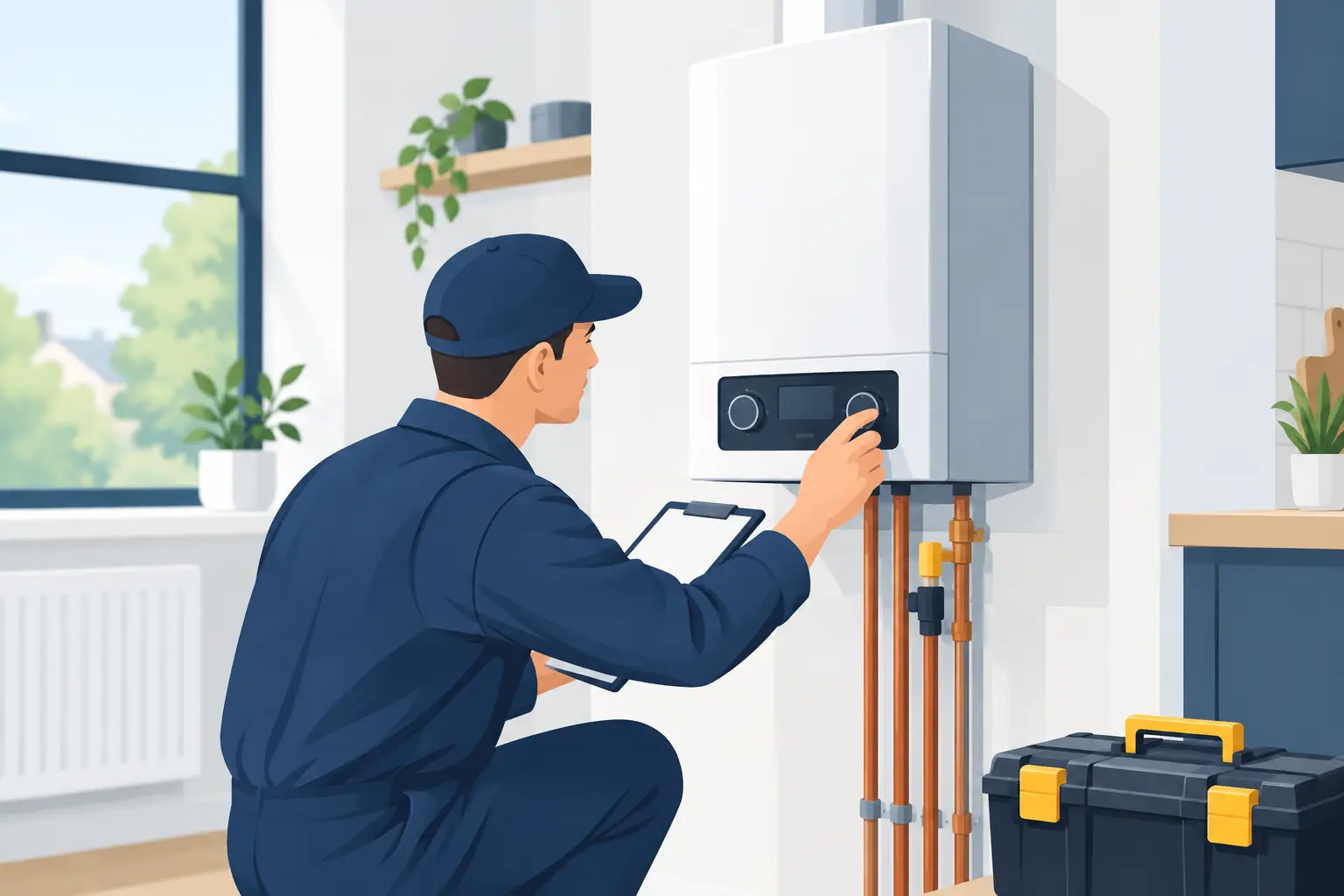
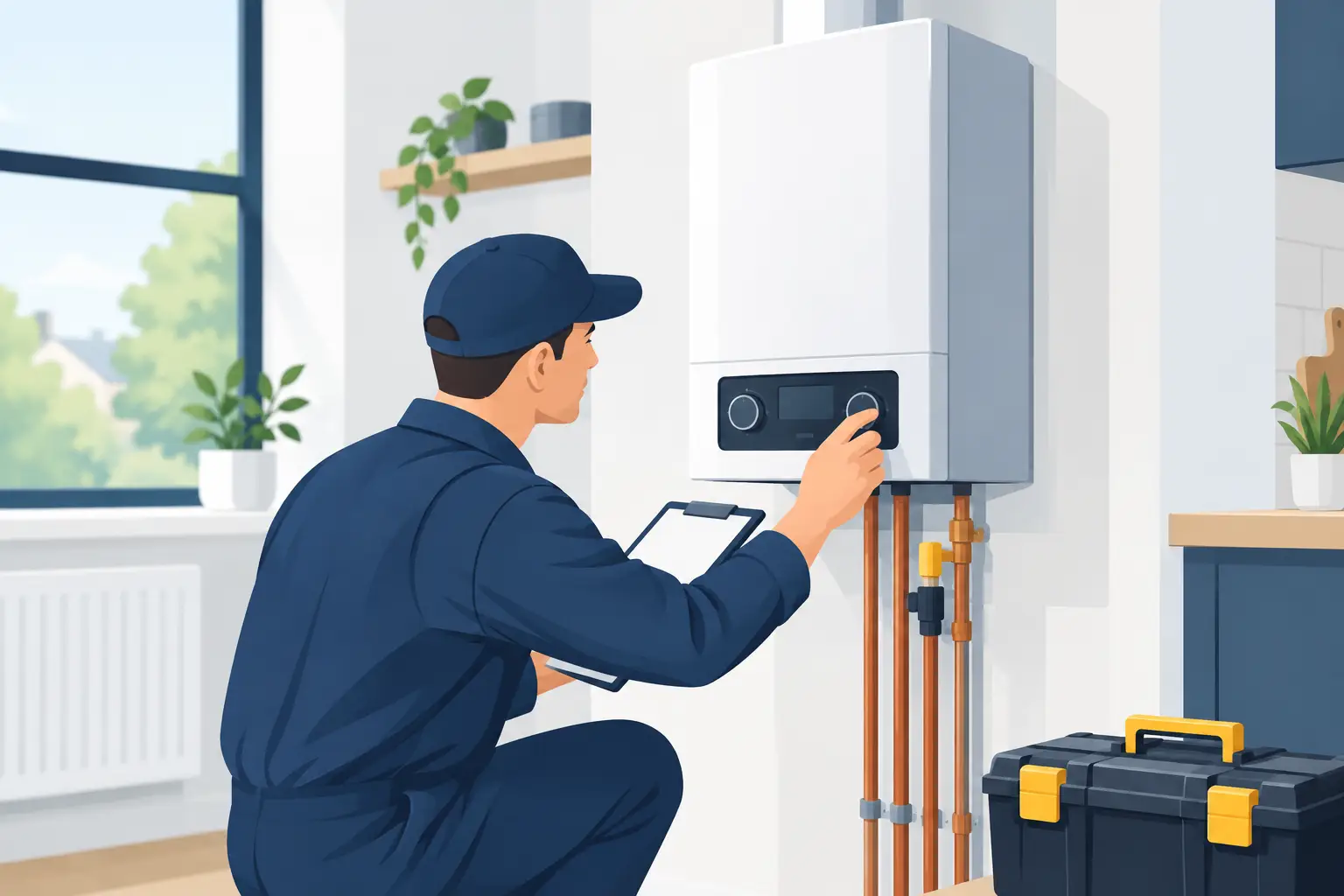
A boiler can only run efficiently if the controls are set up properly. During commissioning, the engineer checks time programmes, room thermostats, smart controls, zone valves and thermostat communication. They should make sure the homeowner understands how to turn heating and hot water on, adjust schedules and identify basic fault messages.
The heating flow temperature should be considered rather than left at a default setting without discussion. Lower flow temperatures can improve condensing boiler efficiency, but the right setting depends on radiator size, insulation levels, heat loss and how quickly the property needs to warm up. In some homes, a lower setting works very well. In others, particularly poorly insulated properties or homes with undersized radiators, it may need to be balanced against comfort.
For a new installation, correct boiler sizing starts with a heat-loss assessment, not a guess based on the outgoing boiler. Commissioning then checks that the installed boiler and controls are delivering the intended result. This is why a bigger boiler is not automatically a better boiler.
Documents you should receive after commissioning
When the work is complete, ask for a clear explanation of what has been done and retain the records somewhere safe. The paperwork should include the completed Benchmark or manufacturer commissioning record, the boiler manual, warranty information and details of the appliance registration process.
For applicable gas work, the installation should be notified through the appropriate route so that the relevant building compliance documentation can be issued. Landlords have separate duties around annual gas safety checks and records. If you manage several properties, keeping digital copies of commissioning and servicing documents makes future renewals, repairs and tenancy changes much easier to manage.
It is also sensible to record the boiler make, model, serial number, installation date and the location of any filter, filling loop or isolation valves. That information can save time if a fault develops later or if another engineer needs to attend.
What a good handover looks like
A good commissioning visit ends with more than a signature. The engineer should show you how the controls work, explain the boiler pressure range, point out the condensate pipework and tell you what to do if a fault code appears. You should know where the gas emergency control valve is and understand that you should not attempt repairs yourself.
Ask practical questions before the engineer leaves. Find out when the boiler should be serviced, whether the warranty has been registered, what type of filter or inhibitor is fitted, and whether any follow-up work has been recommended. If the system has been cleaned, ask what was found and whether there are signs of ongoing corrosion or leaks.
At Chalmers Plumbing & Heating, we treat this handover as part of the job, not an optional extra. Clear settings, complete records and a straightforward explanation give customers a much better starting point than a boiler left running with no context.
When commissioning needs a closer look
You may need an engineer to review the commissioning if a recently installed boiler regularly loses pressure, makes unusual noises, produces inconsistent hot water or struggles to heat parts of the property. These symptoms do not always mean the boiler itself is faulty. They can relate to system debris, incorrect control settings, a leak, poor circulation, a faulty valve or an issue with the original installation.
Do not ignore warning signs simply because the boiler is new. Early investigation can protect the warranty and prevent a minor installation issue from becoming a larger repair. Equally, avoid assuming that every problem requires a boiler replacement. Accurate diagnosis should come first.
Commissioning is the start of proper boiler care
A correctly commissioned boiler should then be serviced annually by a Gas Safe registered engineer. Annual servicing checks safe operation, helps maintain warranty conditions and gives the engineer an opportunity to spot wear before it turns into a breakdown.
Keep the commissioning documents with your property records, use the controls as demonstrated, and arrange help promptly if the system does not behave as expected. A boiler installation earns its value over years of dependable service, and careful commissioning is where that reliability begins.