7 Signs of Faulty Expansion Vessel Problems
By Chalmers Plumbing & Heating
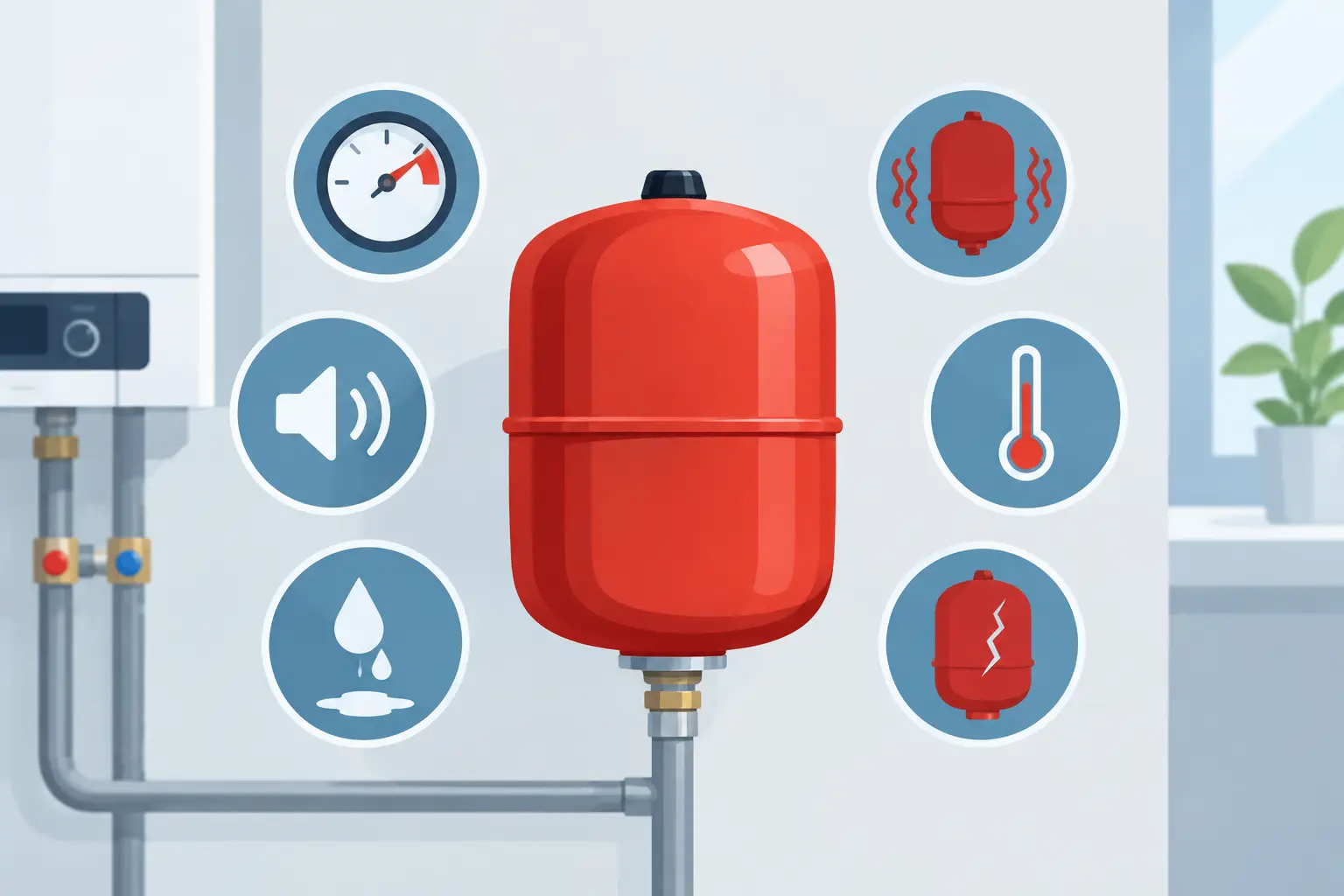
A boiler pressure gauge that behaves perfectly when cold, then climbs towards the red as soon as the heating comes on, is more than an annoyance. It is one of the clearest signs of faulty expansion vessel trouble in a sealed central-heating system. Left unresolved, it can lead to water discharging outside, repeated boiler lockouts and unnecessary strain on heating components.
The expansion vessel is a small but vital part of many modern boiler and heating systems. It gives heated system water somewhere to expand safely. When it loses its air charge or its internal diaphragm fails, pressure has nowhere to go. Understanding the symptoms can help homeowners, landlords and property managers arrange the right repair before a minor fault becomes a cold-property call-out.
What does an expansion vessel do?
Water expands as it heats up. In a sealed system, that increased volume needs to be absorbed rather than allowed to force the system pressure too high. The expansion vessel does this using two chambers separated by a flexible diaphragm. One side contains system water; the other contains air or nitrogen at a set pressure.
As the heating warms up, water pushes against the diaphragm and compresses the air cushion. When the system cools, the vessel helps maintain stable pressure. Most combi boilers have a vessel inside the casing, while larger homes, commercial systems and some system boilers may have an external vessel fitted nearby.
A vessel that has lost its charge can sometimes be repressurised correctly. If the diaphragm has split, however, it will normally need replacing. The right answer depends on proper testing, not simply adding more water to the system.
7 signs of a faulty expansion vessel
1. Boiler pressure rises sharply when the heating is on
This is the classic symptom. A system may sit at a normal cold pressure, often around 1 to 1.5 bar depending on the installation, but climb rapidly as radiators heat up. If it approaches 2.5 or 3 bar, the pressure relief valve may open to protect the boiler.
A small movement in pressure between cold and hot is normal. A dramatic rise is not. Take a note of the gauge before heating comes on and again after the system has been running for 20 to 30 minutes. That information gives an engineer a useful starting point.
2. The pressure drops repeatedly after the boiler has cooled
After the system pressure rises too high, the pressure relief valve may discharge water. Once the heating cools down, the gauge can then read low, sometimes below the boiler's operating range. It is tempting to top it up and carry on, but the same cycle will usually repeat.
Repeatedly repressurising is not a repair. Fresh water introduces oxygen and minerals to the system, which can contribute to corrosion and sludge over time. It can also hide the pattern that points to the actual fault.
3. Water is dripping from the pressure relief discharge pipe
Look outside for the small copper pipe that terminates near the boiler location, often at an external wall. Water dripping or running from this pipe while the heating is operating suggests the pressure relief valve has opened.
The valve may itself be passing, particularly if it has opened several times, but a failed expansion vessel is a common reason it opened in the first place. Do not cap, block or interfere with this pipe. It is a safety discharge route and the water can be hot.
4. You need to top up the pressure more often than usual
A healthy sealed system should not need frequent topping up. If you are using the filling loop every few weeks or months, there is a reason for the water loss. It could be a visible leak, a hidden leak, a passing pressure relief valve or an expansion vessel problem causing discharge during heating cycles.
This is one reason diagnosis matters. Replacing a vessel will not cure a leaking radiator valve, and tightening a visible joint will not fix a ruptured diaphragm. A competent engineer checks the whole system rather than assuming the gauge tells the whole story.
5. The boiler locks out on high or low pressure
Modern boilers monitor pressure for safety. High-pressure lockouts can occur where pressure rises rapidly during operation; low-pressure lockouts can follow once water has been discharged. Either can leave you without heating or hot water until the pressure is corrected.
A one-off low-pressure fault after radiator bleeding may have a straightforward explanation. Recurring faults, especially those linked to the heating being switched on, deserve investigation.
6. Radiators and boiler controls seem to behave inconsistently
An expansion vessel fault does not always announce itself with a visible drip. Some households first notice that the boiler works for a period, then shuts down, or that pressure readings are very different from one day to the next. The heating may seem unreliable despite the thermostat and programmer being set correctly.
These symptoms are not exclusive to the vessel. Pump faults, circulation issues, incorrect filling, leaks and boiler sensor faults can produce similar frustration. The timing is the useful clue: if pressure changes mainly as the system heats and cools, the expansion vessel moves higher up the list of likely causes.
7. Water comes from the vessel's air valve
This is a diagnostic sign an engineer may find rather than one most customers should test themselves. Expansion vessels have an air valve, similar in appearance to a tyre valve. If water is present at that valve, it strongly suggests the internal diaphragm has failed and the vessel is waterlogged.
The vessel's pre-charge must only be checked with the heating system properly depressurised and using suitable equipment. Testing it while the system remains under water pressure can produce misleading readings and lead to an incorrect repair.
Why the fault should not be ignored
Pressure-relief discharge may look minor, but it wastes treated system water and can damage external finishes or create icy patches in colder weather. Internally, repeated high-pressure operation places avoidable stress on the pressure relief valve, seals and boiler components.
For landlords and commercial property managers, there is also the practical issue of repeat attendance. A boiler may be reset and left running after a low-pressure call-out, only to fail again when demand increases. Identifying why the pressure is changing saves disruption for tenants, staff and occupants.
What a heating engineer should check
A proper diagnosis starts with the pressure behaviour of the system, not a guess. The engineer will inspect for leaks, check whether the pressure relief valve has been discharging, and assess the vessel's pre-charge with the system safely depressurised.
They may also check the boiler's filling arrangement, circulation, radiator valves and visible pipework. Where an internal vessel has failed, the practical repair can vary. Some boilers allow the original vessel to be replaced reasonably easily; in other cases, fitting a correctly sized external vessel is the more sensible option. Access, boiler age, manufacturer parts availability and the condition of the rest of the system all affect the recommendation.
If the vessel has simply lost pressure and the diaphragm is intact, recharging it may be appropriate. If it will not hold a charge or water is found at the air valve, replacement is normally the dependable repair. The pressure relief valve may also need replacement if it continues to drip after the underlying cause is corrected.
What you can do before an appointment
Avoid removing the boiler case or attempting to recharge the vessel yourself. Boiler work should be carried out by a suitably qualified engineer, and access inside a gas boiler should not be treated as a DIY job.
You can, however, record the cold and hot pressure readings, note when the boiler locks out, and check from a safe distance whether the external discharge pipe is wet. If there is a significant leak, repeated lockouts or no heating or hot water, arrange an engineer visit promptly. Keeping the boiler pressure within the range shown in its instructions may restore operation temporarily, but do not keep topping it up as a long-term workaround.
For homes and managed properties across Glasgow and the surrounding area, Chalmers Plumbing & Heating can assess unstable boiler pressure, explain the findings clearly and carry out the repair needed. A pressure gauge is often the first warning, but a careful diagnosis is what stops the same fault returning.