Top Signs Your Boiler Needs Replacement Now
By Chalmers Plumbing & Heating
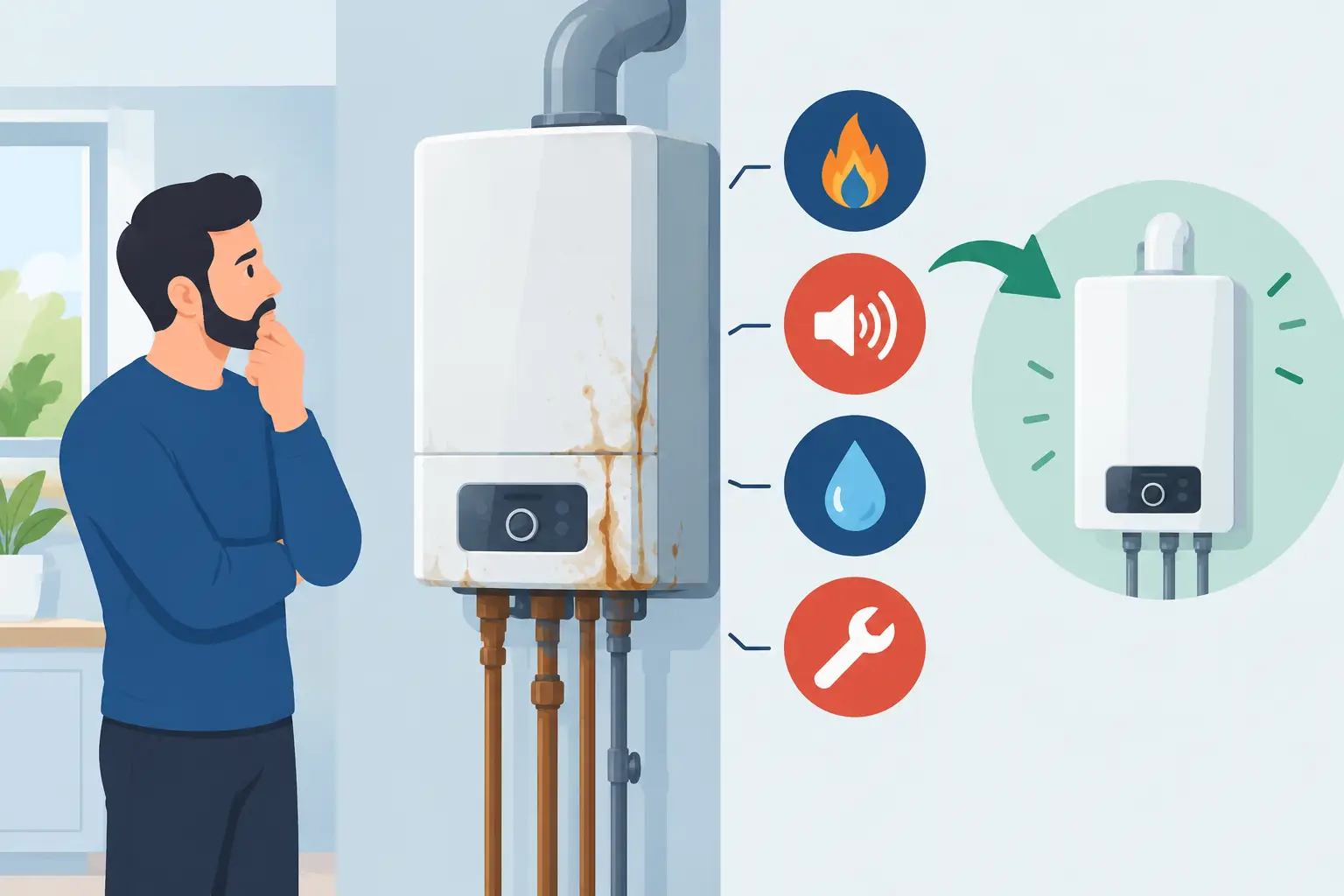
A boiler rarely chooses a convenient time to fail. It is usually on a cold Glasgow morning, before work, or just as a tenant reports there is no hot water. Knowing the top signs boiler needs replacement can help you act before a repair becomes an emergency, but it also prevents you replacing a boiler that still has useful, reliable life left.
The right decision depends on the fault, the boiler’s age and condition, whether replacement parts are available, and the condition of the wider heating system. A clear diagnosis from a Gas Safe registered engineer should come first.
Your boiler is old and faults are becoming regular
A well-installed and properly serviced boiler can often run reliably for 10 to 15 years, sometimes longer. Age alone does not automatically mean replacement is necessary. A ten-year-old boiler with a minor, isolated fault may still be worth repairing, particularly if it has been serviced consistently and parts remain readily available.
The picture changes when call-outs become frequent. If the boiler has needed several repairs in the past couple of years, or a new fault appears soon after the last one was fixed, it may be reaching the point where further spending offers poor value. Common failures can include pumps, fans, valves, circuit boards and heat exchangers. Some are straightforward repairs; others can be costly and may indicate wider wear.
Older models can also become difficult to support when manufacturers stop making key parts. An engineer may be able to repair the immediate issue, but it is sensible to ask whether that repair is likely to provide dependable service through the next heating season.
Rising heating bills without a clear explanation
If your household routine has not changed but gas use has noticeably increased, your boiler may be working less efficiently than it should. Modern condensing boilers recover more heat from flue gases than older non-condensing models, helping reduce wasted energy when the system is set up correctly.
However, higher bills do not always mean the boiler itself is at fault. A poorly timed thermostat, uninsulated pipework, draughts, an incorrectly set flow temperature, or a system full of sludge can all affect running costs. Before committing to a new boiler, an engineer should look at the whole installation. This may include the controls, radiators, system water quality and boiler output.
For a larger home, an undersized boiler can struggle to meet heating and hot-water demand. Equally, fitting an oversized boiler simply because it sounds more powerful is not the answer. Correct sizing should be based on a heat-loss assessment and how the property is actually used.
The top signs your boiler needs replacement rather than another repair
Breakdowns are not all equal. A failed sensor on a boiler that is otherwise sound can be a sensible repair. But replacement is often the more practical route where faults are expensive, repeated, or connected to major components.
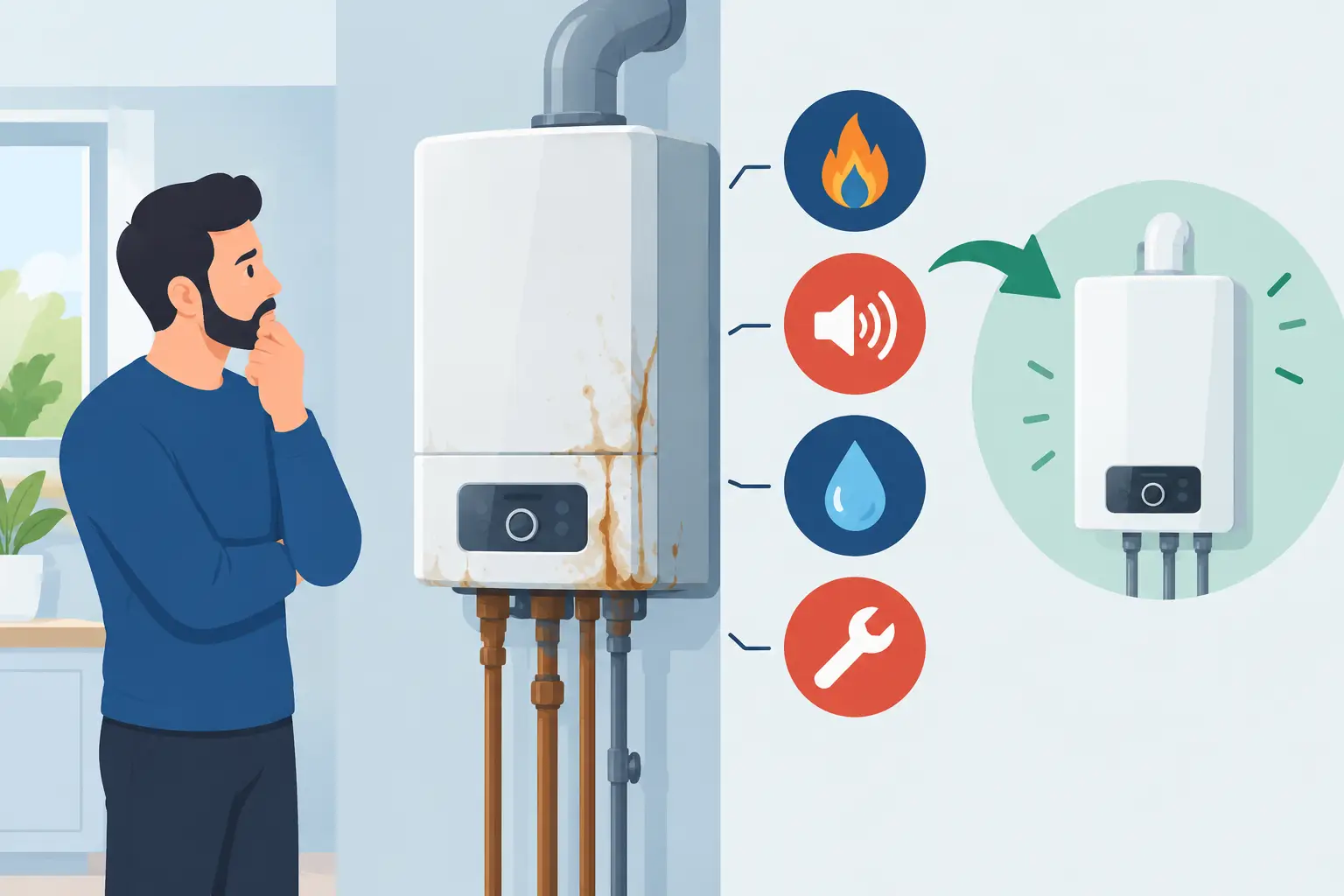
Warning signs worth taking seriously include:
- repeated loss of heating or hot water, especially during colder weather;
- repair costs that are high compared with the age and value of the boiler;
- unavailable or obsolete parts that make a lasting repair uncertain;
- visible corrosion, persistent leaks, or a damaged heat exchanger; and
- a boiler that has become noisy, unreliable and difficult to reset.
No engineer should recommend replacement without explaining why. Ask what has failed, whether the part is available, what the repair is expected to achieve, and whether there are other weaknesses likely to cause trouble soon. Straight answers make it much easier to compare repair costs against the benefit of a new installation.
Leaks, corrosion and pressure problems keep returning
A small drip is never something to ignore. Water can damage internal components and, over time, corrosion can affect pipework, valves and the boiler itself. If pressure regularly drops and you are repeatedly topping it up, there may be a leak somewhere in the system or a problem with an internal expansion vessel or safety valve.
Some pressure issues are repairable. A visible joint leak, for example, may have a straightforward solution. But when leaks and corrosion are widespread, or when a boiler has suffered repeated internal water damage, replacement can be the safer long-term choice.
It is also worth checking the system rather than focusing only on the boiler. Dirty heating water can accelerate component wear, reduce radiator performance and block narrow passages inside modern equipment. A powerflush or chemical clean may be recommended where testing shows sludge or contamination. This should be based on the system’s condition, not added as a routine extra without a reason.
Strange noises and uneven heating are getting worse
Whistling, banging, gurgling or a kettle-like sound from the boiler can point to restricted water flow, limescale, trapped air, a failing pump or sludge within the system. These noises do not automatically mean the boiler needs replaced, but they do need investigating.
Cold patches at the bottom of radiators, rooms that never reach temperature, and radiators that require frequent bleeding can also indicate problems beyond the appliance. A repair, balancing adjustment or system clean may restore performance. If an ageing boiler is also struggling with major internal faults, poor circulation can be another factor supporting replacement as part of a properly planned system upgrade.
Hot water is unreliable or no longer meets demand
A combi boiler should provide dependable hot water when you need it. If the temperature swings between hot and cold, the flow has weakened, or the boiler cuts out whenever more than one outlet is used, there may be a fault with the diverter valve, plate heat exchanger, sensor or water supply.
In some properties, the boiler is working as designed but is no longer suitable for the household. A growing family, an added bathroom or a loft conversion can all change hot-water demand. That is a design issue rather than a simple breakdown. An engineer can discuss whether a higher-output combi, a system boiler with cylinder, or revised controls would better suit the property.
For landlords and property managers, reliable hot water is not merely a convenience. Clear records of servicing, repairs and installation work help demonstrate that the heating system has been looked after and that faults have been addressed responsibly.
Safety concerns need prompt action
Never attempt to diagnose or repair a gas boiler yourself. If you smell gas, suspect a carbon monoxide issue, see soot or staining around the appliance, or feel unwell with symptoms such as headaches, nausea or dizziness, turn the appliance off if it is safe to do so, ventilate the property and seek urgent professional advice. Follow the emergency guidance provided by your gas network where appropriate.
A yellow or unstable flame on older visible-flame appliances, repeated burner lockouts, or a boiler that has been labelled unsafe by an engineer are all matters that require immediate attention. A boiler may be repairable, but safety takes priority over keeping an old appliance in service.
What a proper replacement should include
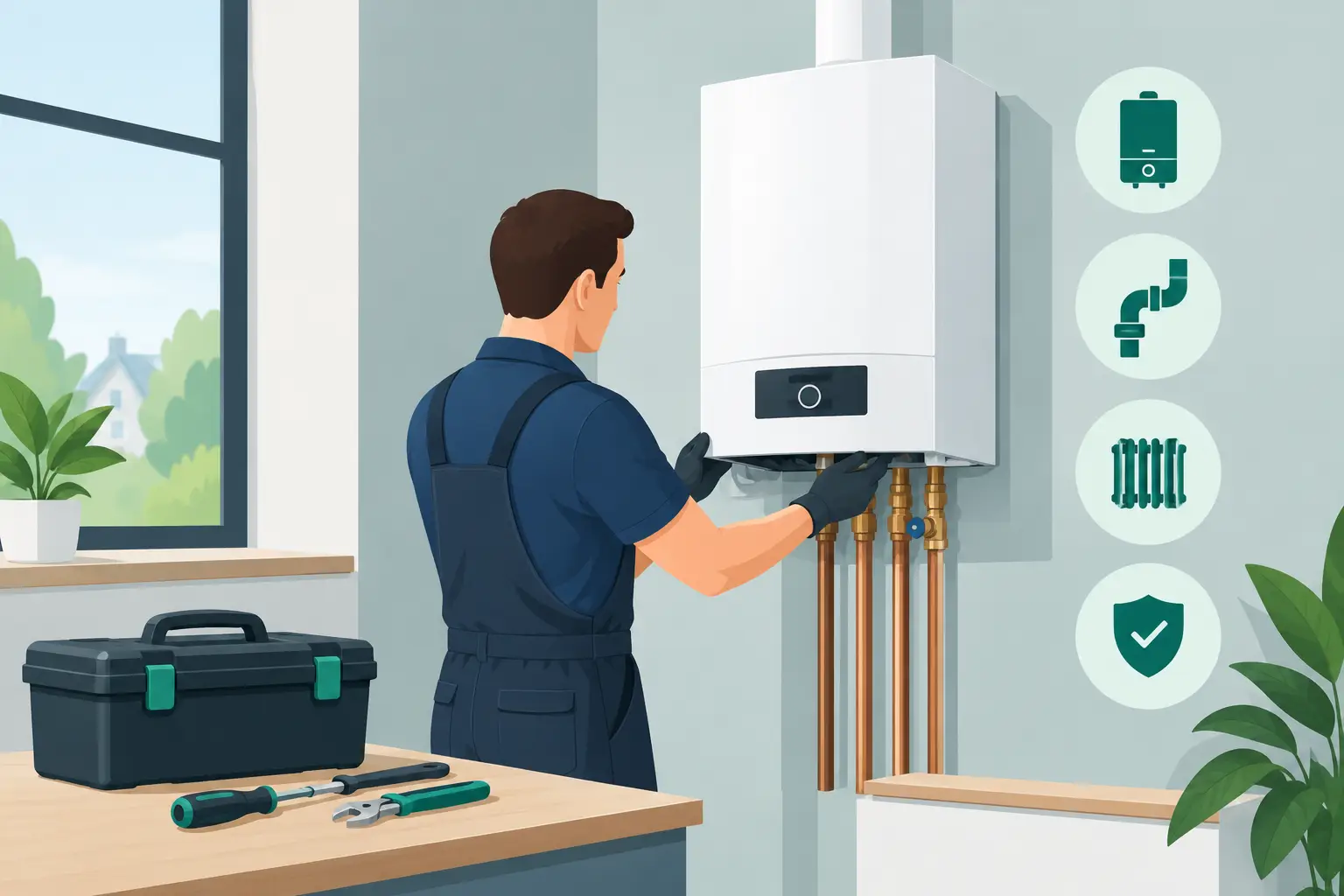
Replacing a boiler is not simply a case of swapping one box for another. The best result comes from checking the property’s heat requirement, choosing the right boiler type and output, reviewing the condition of the existing system, and making sure controls are suitable for the way you live or manage the building.
The installation should include safe removal of the old appliance, correctly sized pipework where needed, appropriate condensate and flue arrangements, system cleaning or protection where required, and full commissioning. The engineer should test the appliance, set it up correctly, register the manufacturer warranty where applicable, and explain the controls in plain language. Keep the service record and commissioning paperwork somewhere accessible.
For homes with compatible controls, smart thermostats and zoning can make heating easier to manage and reduce unnecessary running. They are useful additions, but they cannot compensate for a poorly sized boiler or a neglected heating system.
Make the decision before the next breakdown
If your boiler is showing more than one of these signs, arranging an assessment before winter gives you more choice than waiting for a complete failure. You can weigh up a repair against replacement, consider the right system for the property, and plan the work around your household, tenants or business operations.
A dependable boiler should heat your property safely, provide the hot water you need and do its job without repeated resets, leaks or costly surprises. When it cannot do that, a well-specified replacement installed and commissioned properly is often the most reassuring next step.