What Causes Cold Radiator Spots? Common Faults
By Chalmers Plumbing & Heating
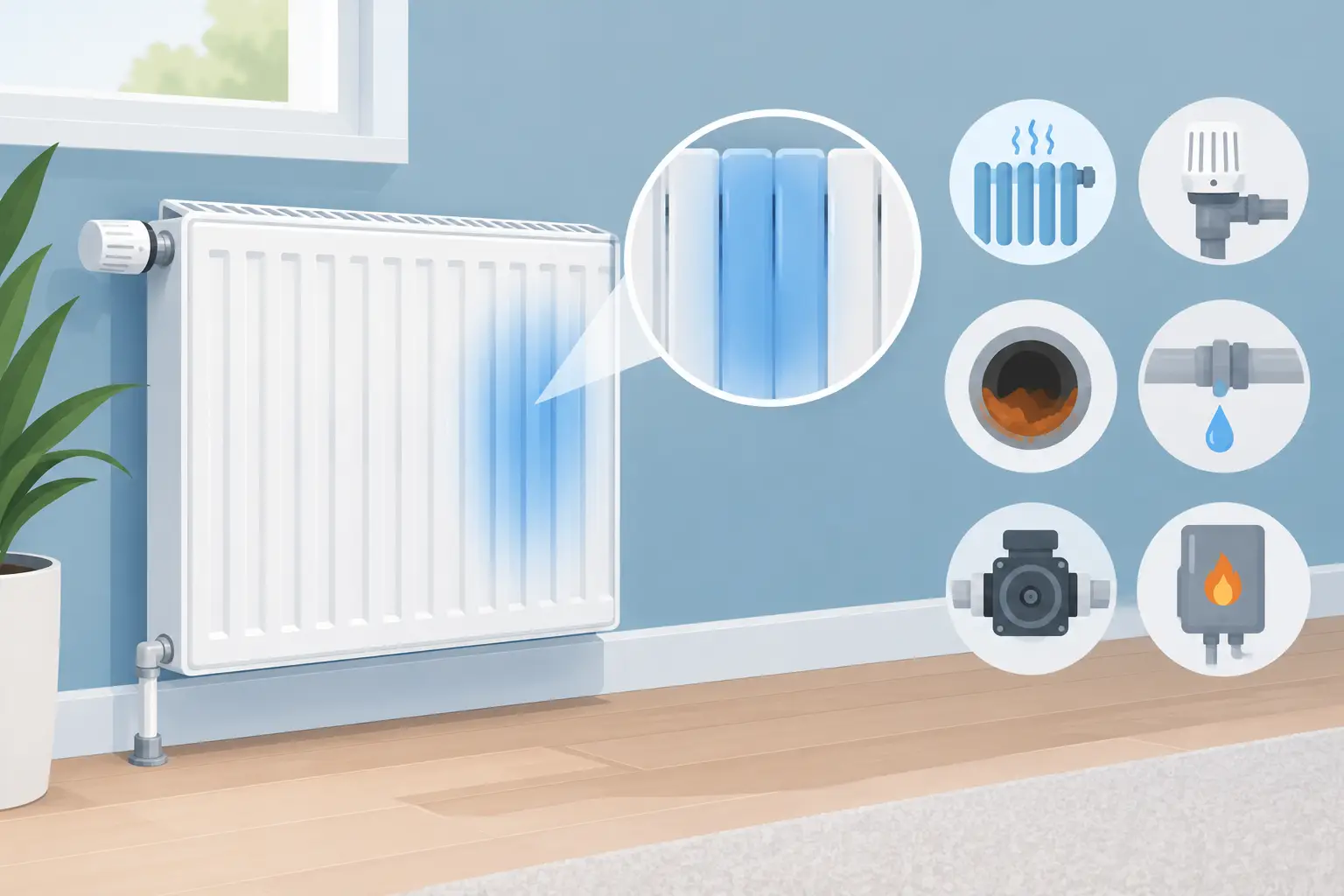
A radiator can feel hot at one end and noticeably cold at the other, even when the boiler appears to be working normally. So, what causes cold radiator spots? Usually, it is a circulation issue inside the radiator or heating system - but the position of the cold area gives a useful clue about the likely fault.
A cold strip along the top, a cool patch at the bottom, or a radiator that is only warm near the valves do not all point to the same repair. Identifying the pattern before making adjustments helps avoid unnecessary work and gets the heating back to an even, comfortable temperature.
What causes cold radiator spots in different areas?
Central heating water needs to circulate freely through every radiator. If air, debris or a faulty control restricts that flow, part of the radiator will not receive enough hot water. The radiator may still warm the room a little, but it will not deliver its full output and your boiler may run longer than it needs to.
Cold at the top: trapped air
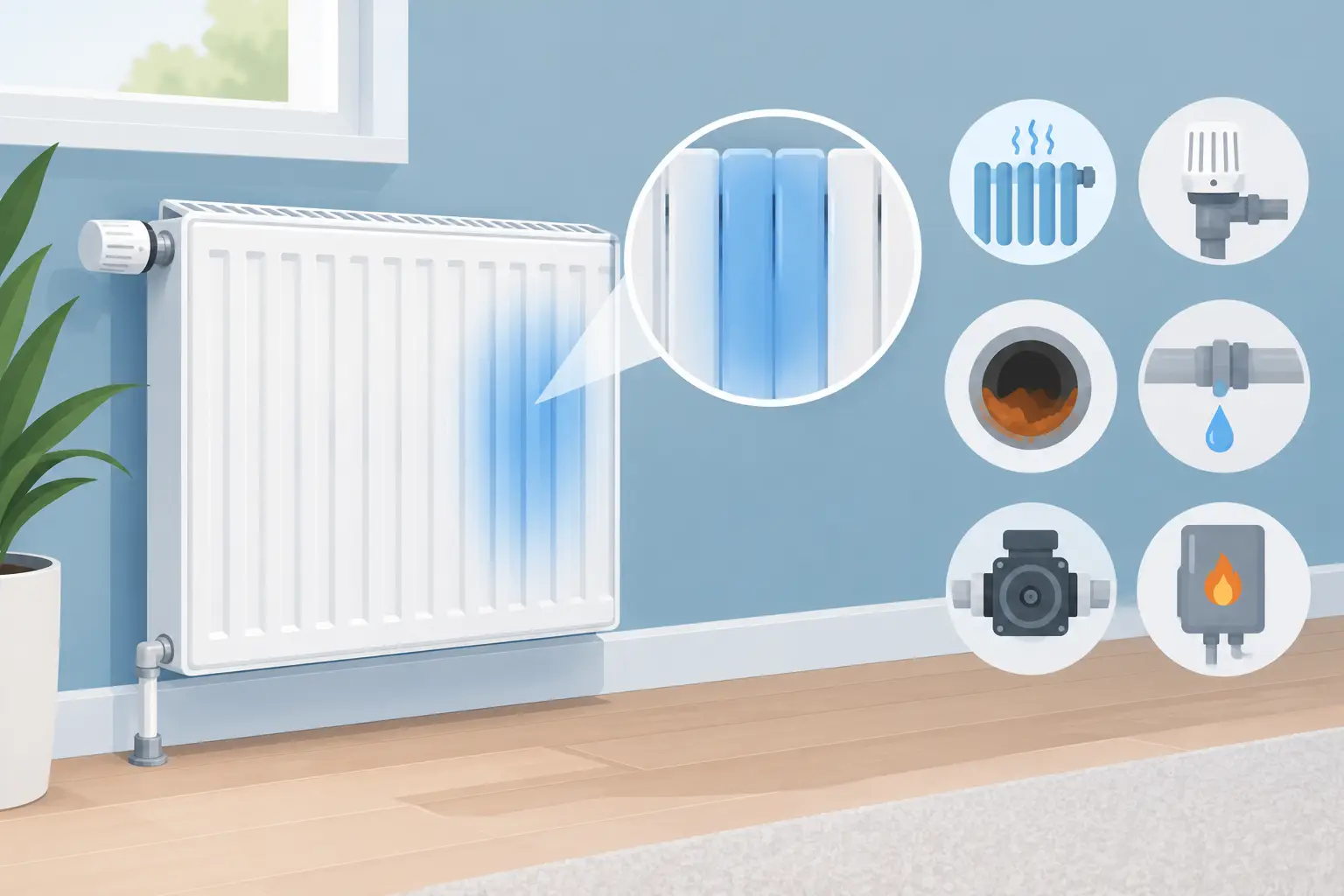
If the top of a radiator is cold while the lower section is warm, trapped air is the usual cause. Air rises through the heating system and collects at the highest point of the radiator, leaving no room for hot water to reach that area.
You may also hear gurgling or trickling noises when the heating starts. Bleeding the radiator can release this air, provided the system pressure is correct and there is no underlying reason for repeated air build-up.
On a sealed system, check the boiler pressure after bleeding. It may need topping up in line with the manufacturer’s instructions. If a radiator regularly needs bleeding, however, it is worth having the system checked. Persistent air can be linked to a small leak, a failing expansion vessel, corrosion inside the system or an issue with automatic air vents.
Cold at the bottom: sludge and debris
A radiator that is warm at the top but cold along the bottom is often holding sludge. Over time, metal components in a heating system can corrode internally. The resulting magnetite - a dark, fine metallic debris - settles in low-flow areas, particularly at the bottom of radiators.
As the deposit builds up, it blocks the water channels that transfer heat across the panel. The radiator may need a long time to warm up, feel patchy, or remain cold at the base even with both valves open.
Bleeding will not remove sludge. Depending on the condition of the system, the right solution could be removing and flushing an individual radiator, cleaning the wider system, or carrying out a properly planned powerflush. A powerflush is not automatically the answer to every cold radiator, though. It should follow diagnosis, especially in older systems where poor joints, weak valves or existing leaks may need attention first.
Cold at one end: poor flow through the radiator
When one side of a radiator is hot and the other stays cold, check the valves and system balance. Each radiator has a pair of valves: the thermostatic radiator valve, often called a TRV, and a lockshield valve on the other side. If either valve is partly closed, stuck or incorrectly set, water may not flow through the full radiator.
TRV pins can stick, particularly after the heating has been off over summer. The valve head may show a high setting while the internal pin remains closed. A heating engineer can confirm whether the valve is operating correctly and replace it if necessary.
The lockshield valve may also need adjustment as part of balancing. Balancing is the process of setting each radiator so that hot water is shared properly around the property. Without it, radiators closest to the boiler or pump can take more than their share of flow, leaving those further away slow to heat or partly cold.
Other causes of uneven radiator heat
Not every cold spot begins inside the radiator. The wider heating system has to provide the correct flow, pressure and control for every room.
A circulation pump running at the wrong speed, partly blocked pipework or a system filter full of debris can all reduce circulation. In larger homes, converted properties and commercial premises, poorly designed pipework or changes made during an extension can create a more complex balancing problem.
Boiler settings matter too. If the central-heating flow temperature is set too low, some radiators may feel only lukewarm. Lower temperatures can improve efficiency in suitable systems, particularly with modern condensing boilers or heat pumps, but they must be matched to correctly sized radiators and the building’s heat loss. Turning the temperature up may mask a circulation fault rather than resolve it.
Smart controls and zone valves can occasionally contribute to an apparent radiator fault. For example, a room thermostat may be satisfied before a colder room has warmed up, or a zone valve may not be opening fully. A professional diagnosis should consider the controls as well as the radiator itself.
Checks you can make safely before arranging a repair
Start by comparing the radiator to others in the property when the heating has been running for at least 30 minutes. Feel the panel carefully, as it can become hot enough to cause discomfort. Note whether the cold section is at the top, bottom or one side, and whether the issue affects one radiator or several.
Make sure the thermostatic valve is turned up and that no furniture, heavy curtains or radiator covers are trapping heat around it. A TRV needs to sense the room temperature properly. If it is enclosed, it may shut down the radiator early even though the room still feels cool.
You can also look at the boiler pressure gauge if you have a sealed system. Many domestic systems operate around 1 to 1.5 bar when cold, although the correct pressure depends on the installation and manufacturer guidance. A very low pressure reading can affect circulation. Do not repeatedly top up a system without finding out why pressure is being lost.
If only the top is cold, bleeding may be appropriate. Switch the heating off and allow the radiator to cool first. Use a radiator key and cloth, open the bleed point slowly, and close it once water begins to emerge. Avoid touching boiler components or dismantling valves and pipework. If you are unsure, it is better to arrange a visit than risk a leak or damage to the valve.
When a cold radiator needs professional attention
A single radiator with a cold top can often be a straightforward bleed. Repeated cold spots, brown or black water, a drop in boiler pressure, banging noises or several underperforming radiators point to a system issue that needs more than a quick adjustment.
A heating engineer can check the radiator valves, confirm pump operation, inspect filters, assess system water quality and balance the heating correctly. Where cleaning is required, they can determine whether an individual radiator flush, chemical clean or powerflush is proportionate to the fault. They should also add inhibitor after system work where appropriate, helping reduce future corrosion.
For landlords and property managers, uneven heating should be dealt with promptly. It can lead to tenant complaints, higher energy use and avoidable stress on the boiler. Recording the diagnosis and work completed also provides a clearer maintenance history for the property.
At Chalmers Plumbing & Heating, the approach is to establish why the radiator is cold before recommending a repair, whether that means releasing trapped air, freeing a valve, balancing the system or addressing sludge in the pipework. Correct commissioning and testing afterwards matter just as much as the repair itself.
Preventing cold spots from returning
Annual boiler servicing does not always include a full heating-system clean, but it is a good opportunity to raise any changes in radiator performance. Catching dirty system water, pressure loss or a sticking valve early is usually simpler than waiting for several radiators to fail to heat properly.
Keep the system protected with the correct inhibitor, have magnetic filters cleaned where fitted, and avoid draining or topping up the system unnecessarily. After an extension, radiator replacement or boiler upgrade, ask for the system to be balanced and controls checked rather than assuming the existing settings will suit the new layout.
A radiator should heat evenly and predictably. If yours does not, the pattern of the cold spot is useful information - and a careful diagnosis can restore warmth without replacing parts that are still doing their job.