What Size Boiler Do I Need in Glasgow Homes?

By Chalmers Plumbing & Heating

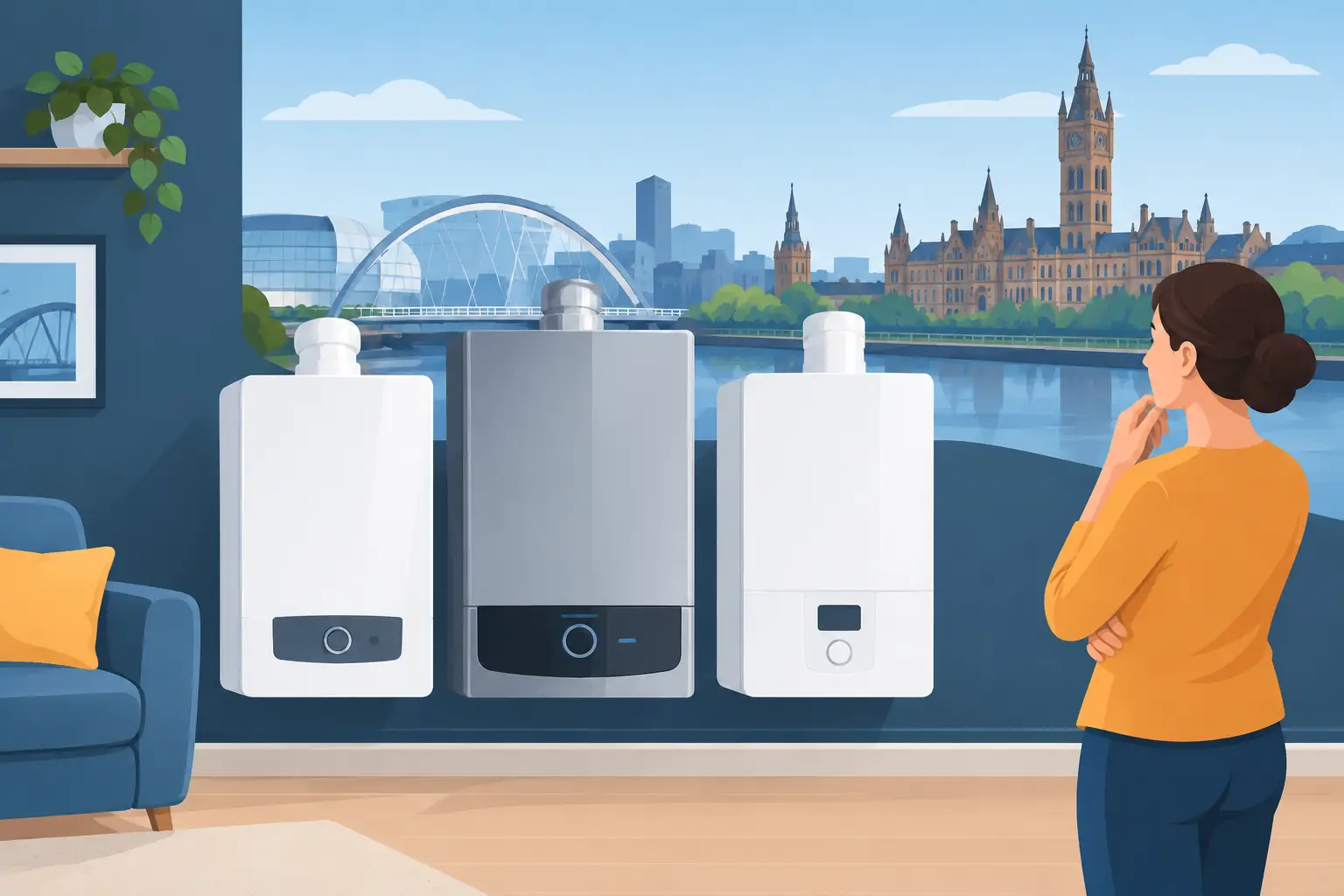
A boiler that is too small can leave the house slow to warm up and short of hot water. One that is oversized can cost more than necessary, cycle on and off inefficiently, and make it harder to get the best from modern controls. When customers ask, “what size boiler do I need?”, the honest answer is that the number of bedrooms is only part of the picture.
Boiler size is measured in kilowatts (kW), which describes the amount of heat the boiler can produce. The right output depends on how much heat your property loses, how many radiators it serves, and how much hot water your household needs at busy times. A proper assessment turns those details into a boiler recommendation that is suitable for your home, rather than a guess based on the old unit.
What size boiler do I need for my property?
For a typical Glasgow home, the following figures can be a useful starting point. They are not a replacement for a heat-loss calculation, but they help explain why boiler outputs vary.
A smaller flat or one-bedroom home with one bathroom may suit a 24kW combi boiler. Many two or three-bedroom homes with one bathroom are well served by a 24-30kW combi, depending on insulation and hot-water use. A larger family home with two bathrooms may need a 30-35kW combi, or a system boiler and hot-water cylinder. Properties with several bathrooms, high simultaneous demand, large extensions or substantial heat loss often need a different approach altogether.
The key point is that a boiler has two jobs. It supplies the central-heating system and, in the case of a combi boiler, it produces domestic hot water on demand. The output needed to heat a well-insulated three-bedroom house can be modest, while the output needed to deliver a strong shower flow may be much higher. That is why a 30kW combi is common in an average home even where the calculated heating load is significantly lower.
Start with a heat-loss calculation, not bedroom count
A professional boiler survey should include a room-by-room heat-loss check. This establishes how much heat is needed to keep each room comfortable on a cold day, taking account of the building itself.
Factors that affect the result include the age and construction of the property, wall and loft insulation, glazing, room dimensions, ventilation, exposed walls, and whether there is a conservatory or extension. A traditional stone tenement, a draughty detached house and a modern insulated new build can all have three bedrooms but require very different heating outputs.
Local conditions matter too. Glasgow winters are generally mild compared with some inland Scottish areas, but wind, rain and damp can make a poorly insulated property feel colder and increase heat loss. Improving insulation, draught-proofing or replacing poor windows before fitting a new boiler may reduce the size required and improve comfort throughout the property.
The calculation also helps determine whether your current radiators are correctly sized. If a room has always felt cold, simply fitting a larger boiler may not solve it. The issue could be undersized radiators, poor system balance, sludge in the pipework or heat escaping through the fabric of the building.
Do not use the old boiler as your only guide
An existing boiler is not always a reliable sizing reference. It may have been installed when the property had fewer bathrooms, before an extension was built, or at a time when oversizing was common practice. Equally, a boiler that has struggled for years may have been undersized from day one.
A new boiler should be chosen around the home as it stands now and how it is used. This is particularly relevant after a loft conversion, kitchen extension, renovation or change in household size.
Hot-water demand often decides the boiler type
The number of bathrooms matters because it tells us how likely it is that people will use hot water at the same time. A combi boiler heats water as you use it and does not need a cylinder. It is a practical choice for many flats and smaller homes, freeing up airing-cupboard space and avoiding stored-water heat losses.
However, a combi has limits. If one person is showering while another runs a bath or uses a second shower, the flow rate can drop. Fitting an increasingly powerful combi does not always fix this, especially where the incoming mains-water flow is limited.
For homes with two or more regularly used bathrooms, a system boiler with an unvented hot-water cylinder can be the better option. The cylinder stores a useful volume of hot water, allowing more than one outlet to be used with greater consistency. It requires space and must be designed, installed and maintained correctly, but it can offer a better experience for a busy family household.
A conventional or regular boiler with a cylinder and tanks may still be appropriate in some older properties, particularly where water pressure or existing pipework makes a like-for-like arrangement sensible. There is no single best boiler type for every home.
Boiler output is only one part of a good installation
Correct sizing is vital, but a well-performing system also depends on the condition and design of the rest of the heating installation. Before replacing a boiler, an engineer should consider radiator capacity, pipework layout, water quality, controls and the flue route.
If the system contains sludge or debris, powerflushing or other appropriate cleaning may be recommended before the new boiler is commissioned. This protects the new appliance, supports efficient circulation and helps avoid faults caused by contaminated system water. A magnetic filter and correct inhibitor levels are also worthwhile safeguards.
Modern controls make a noticeable difference once the boiler is correctly sized. A programmable thermostat, smart controls, thermostatic radiator valves and zoning can stop rooms being heated unnecessarily. Weather compensation and load compensation, where compatible with the boiler, can help it run at lower flow temperatures for longer periods. That is generally more efficient than repeatedly firing at full output and switching off again.
For landlords and property managers, correct specification is also about reliability and records. A professionally commissioned installation should include the required safety checks, manufacturer registration where applicable, clear handover information and documentation that can be retained for the property file.
Common sizing mistakes to avoid
The most common mistake is choosing a boiler solely from a quick online chart. These charts can be useful for rough comparisons, but they cannot assess insulation levels, water pressure, heat loss or the condition of an existing system.
Another mistake is assuming larger always means better. An oversized boiler may short-cycle, particularly in a smaller or well-insulated home. Frequent cycling can reduce efficiency and place unnecessary wear on components. Conversely, undersizing can mean radiators take too long to warm up and hot water is disappointing when demand is high.
It is also easy to focus on the boiler while overlooking the water supply. A high-output combi needs adequate incoming mains flow and pressure to provide its advertised hot-water performance. Where supply is restricted, the conversation may need to move towards stored hot water, plumbing improvements or realistic expectations of flow rate.
Finally, do not treat a boiler replacement as a like-for-like box swap. A new boiler should be matched to current household needs, installed to manufacturer requirements and commissioned carefully. That includes checking gas rate, combustion, system pressure, controls and radiator operation.
When to arrange a professional boiler survey
A survey is particularly worthwhile if you are adding a bathroom, extending the property, replacing an unreliable boiler, changing from a conventional system to a combi, or planning an energy-efficiency upgrade. It is also sensible where some rooms are cold, showers lose pressure, or the old boiler has a history of breakdowns.
A Gas Safe-registered engineer can assess the heating and hot-water requirement, explain the options in plain language and identify any work needed beyond the appliance itself. Chalmers Plumbing & Heating carries out heat-loss checks and system assessments so homeowners can choose equipment with a clear understanding of the trade-offs, cost and expected performance.
The right boiler should suit the way your property is actually lived in: warm rooms when you need them, dependable hot water at busy times, and a system that has been installed and commissioned properly. A measured survey before you buy is the simplest way to get there.