How to Bleed Radiators Safely in Your Home
By Chalmers Plumbing & Heating
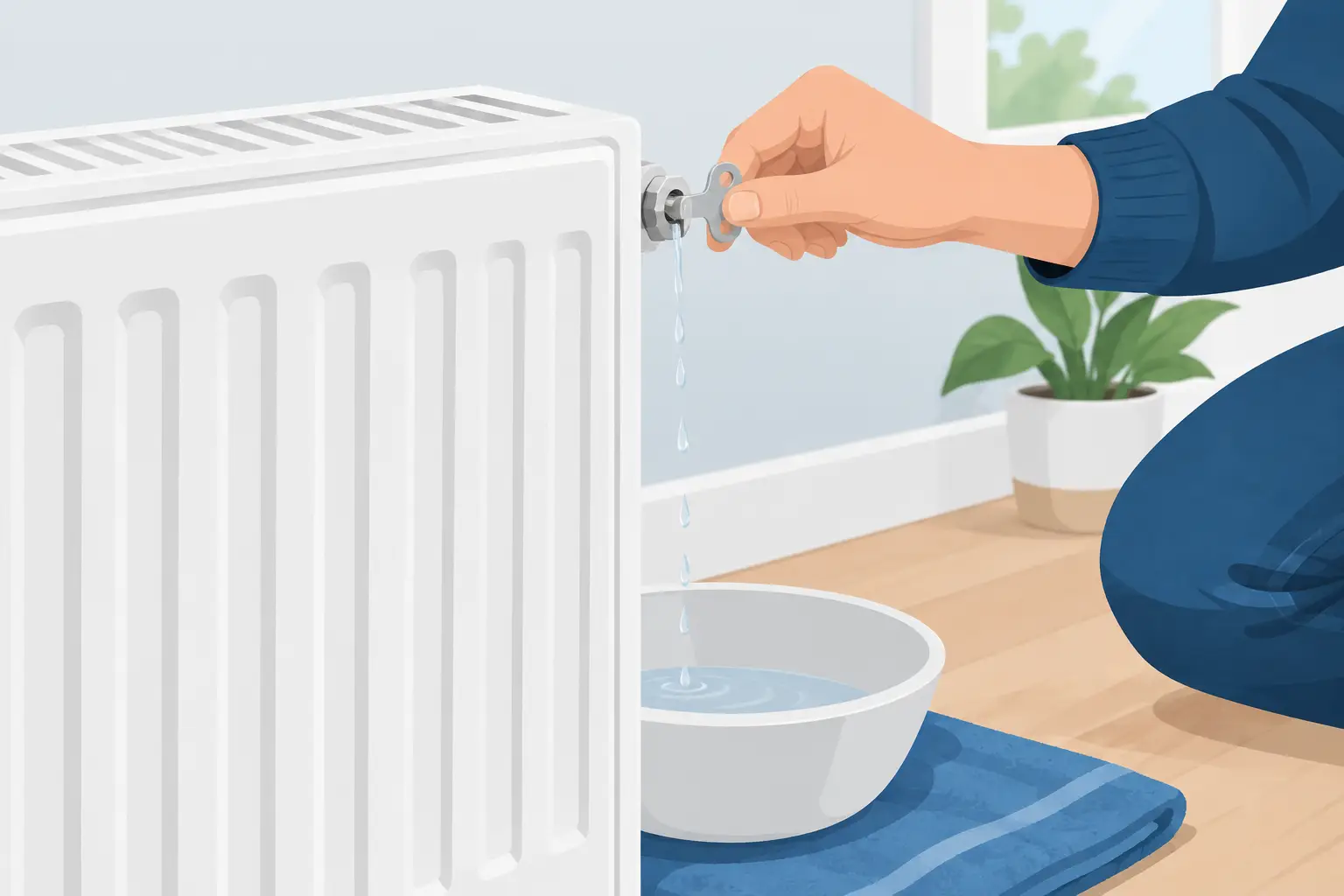
A radiator that is warm at the bottom but cold along the top is usually holding trapped air. It can make a room slow to heat, leave the boiler working harder than it should and create gurgling sounds in the pipes. Knowing how to bleed radiators safely is a useful bit of home maintenance, but it needs to be done in the right order to avoid hot water, pressure loss or an unnecessary boiler fault.
For most homes, this is a straightforward task. The key is to let the system cool down first, open each valve slowly, and check the boiler pressure afterwards. If the issue keeps returning, however, bleeding alone may not be the answer.
Before You Bleed a Radiator: Check the Symptoms
Trapped air rises inside a radiator, which is why the top feels noticeably cooler than the lower section. Run your hand close to the front of the radiator to check for a temperature difference, but do not touch it if the heating has recently been running.
A cold radiator is not always an air problem. If it is cold at the bottom but warmer at the top, sludge or debris may be restricting circulation. If only one radiator does not heat up, its thermostatic valve may be stuck, the lockshield setting may be incorrect, or the radiator may need balancing. Bleeding will not correct these faults.
It is also worth checking that the heating is switched on, the room thermostat is calling for heat and the radiator valve is open. A simple check first can save taking pressure out of a system that has no trapped air to release.
What You Need to Bleed Radiators Safely
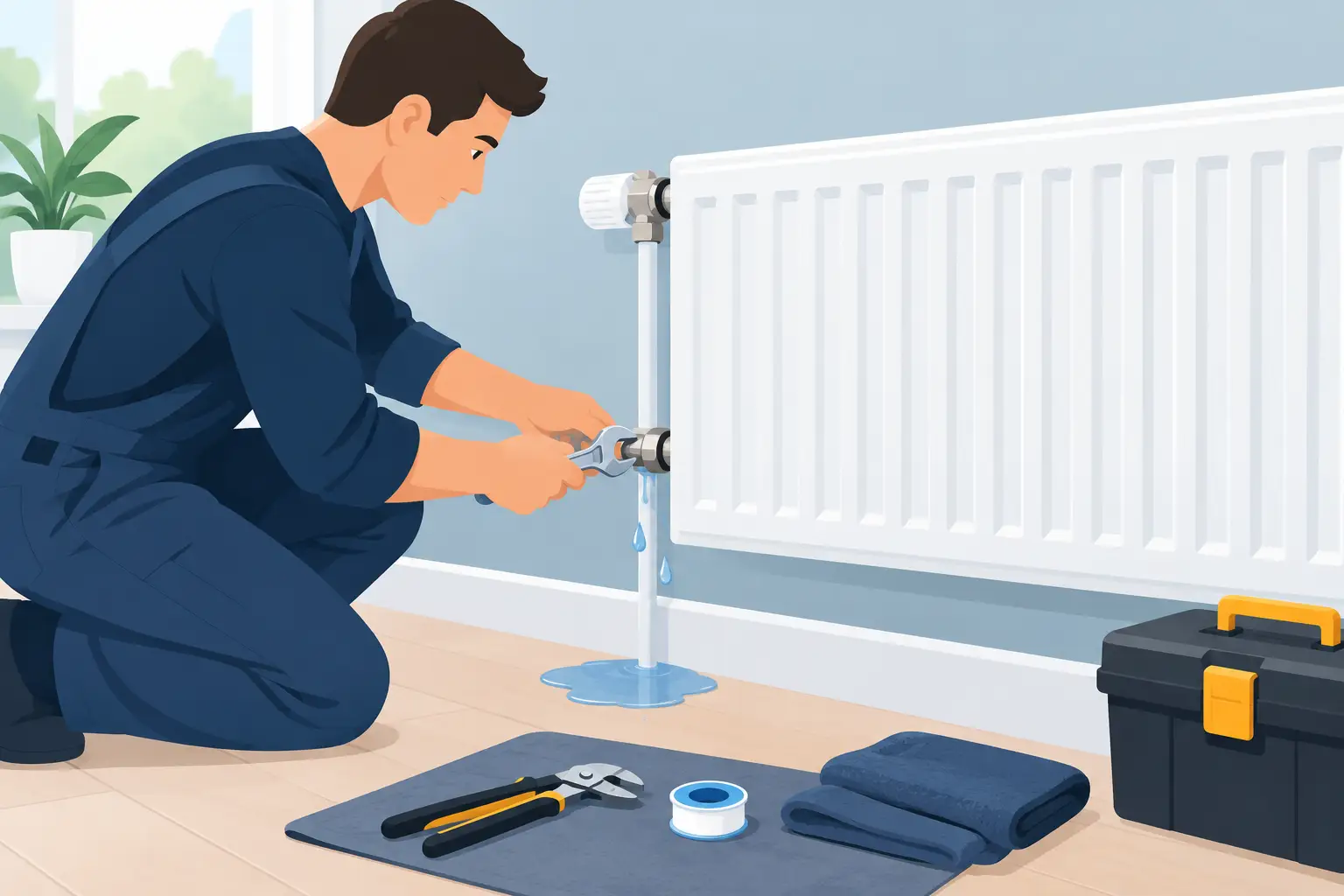
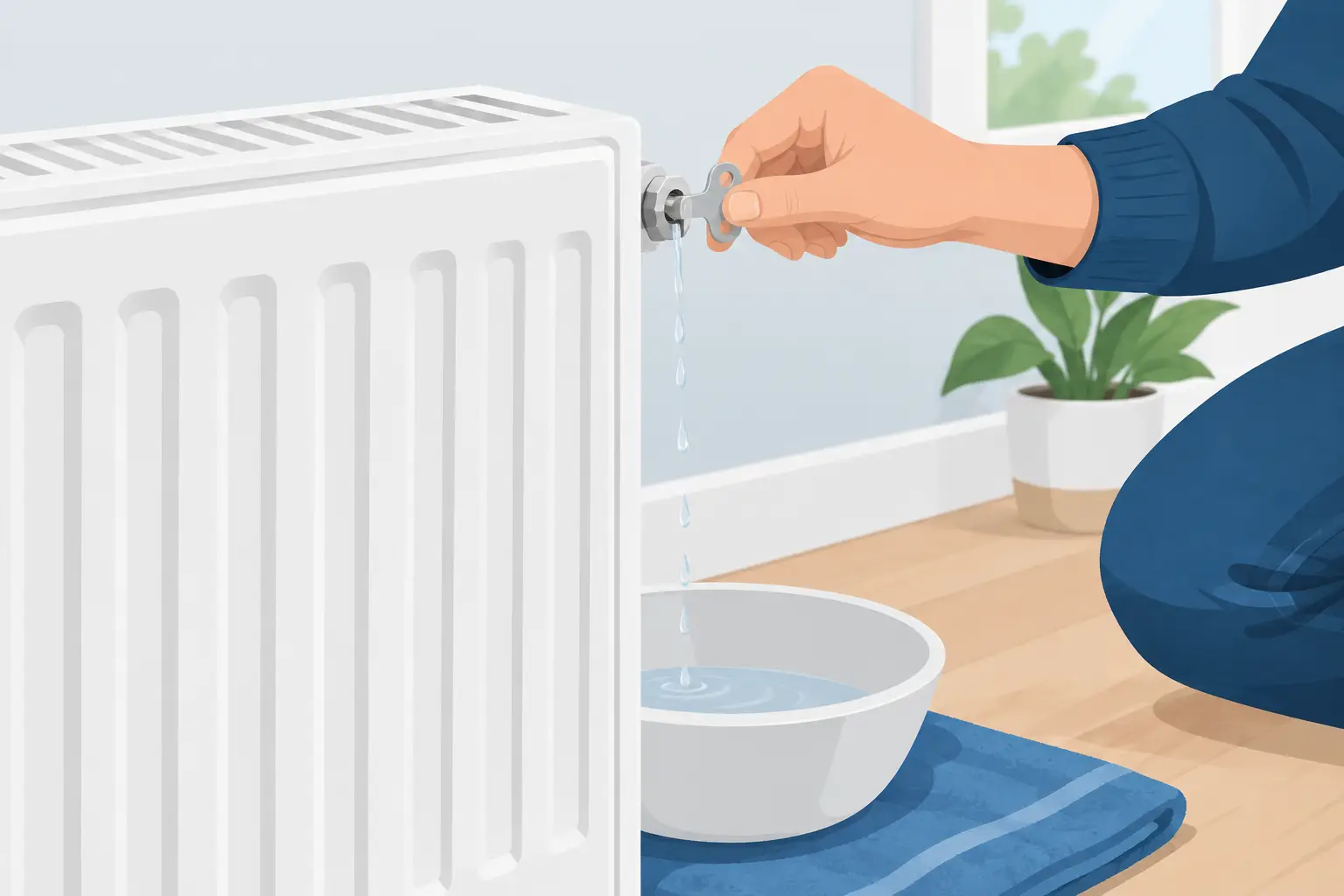
You will normally need a radiator key. Some modern radiators have a flat bleed screw that can be opened with a small flat-head screwdriver instead. Keep a dry cloth or small towel beneath the valve and have a small container ready to catch any water.
Avoid using pliers or forcing the valve. A bleed screw only needs a small turn. If it is seized, damaged, corroded or turning without opening properly, stop there. Forcing it can damage the valve and lead to a leak.
How to Bleed Radiators Safely: The Right Method
Start by turning the boiler and central heating off. If the radiators are hot, give them time to cool fully. This matters for two reasons: hot water can cause a burn, and circulating water makes it harder to tell whether the radiator has been properly vented.
If your system has a pressure gauge, make a note of its reading before you begin. Many sealed systems run at around 1 to 1.5 bar when cold, but always follow the guidance for your specific boiler or heating system.
Start with the lowest radiator
In a two-storey home, begin downstairs and work your way upwards. Air naturally rises through the system, so the upper radiators are often the ones that need most attention. In a single-storey property, work methodically around the rooms so none are missed.
Open both radiator valves fully before bleeding, including the thermostatic radiator valve where fitted. Do not adjust the lockshield valve unless you know the system has been balanced correctly, as changing it can affect how heat is shared around the house.
Open the bleed valve slowly
Place the cloth and container under the bleed valve, usually found at the top corner of the radiator. Insert the radiator key and turn it anticlockwise very slowly, normally by no more than a quarter turn.
You should hear a steady hiss as trapped air escapes. Keep the valve open until water begins to emerge in a consistent trickle. A few drops are normal. Once water appears, turn the key clockwise gently until the valve is closed. It should be snug, not overtightened.
Wipe away any water straight away, then move on to the next radiator. Check the floor beneath each radiator before you leave the room, particularly if there is carpet, timber flooring or a finished wall close to the valve.
Check boiler pressure after bleeding
Bleeding radiators releases air and a small amount of water, which can reduce pressure in a sealed central-heating system. Once every radiator has been checked, look again at the boiler pressure gauge while the system is still cold.
If the pressure has fallen below the recommended range, it may need repressurising using the filling arrangement fitted to your boiler. The correct method differs between boiler models. Some have an external braided filling loop, while others use an internal filling key or lever. Follow the boiler manufacturer’s instructions and add water slowly, stopping at the correct cold pressure.
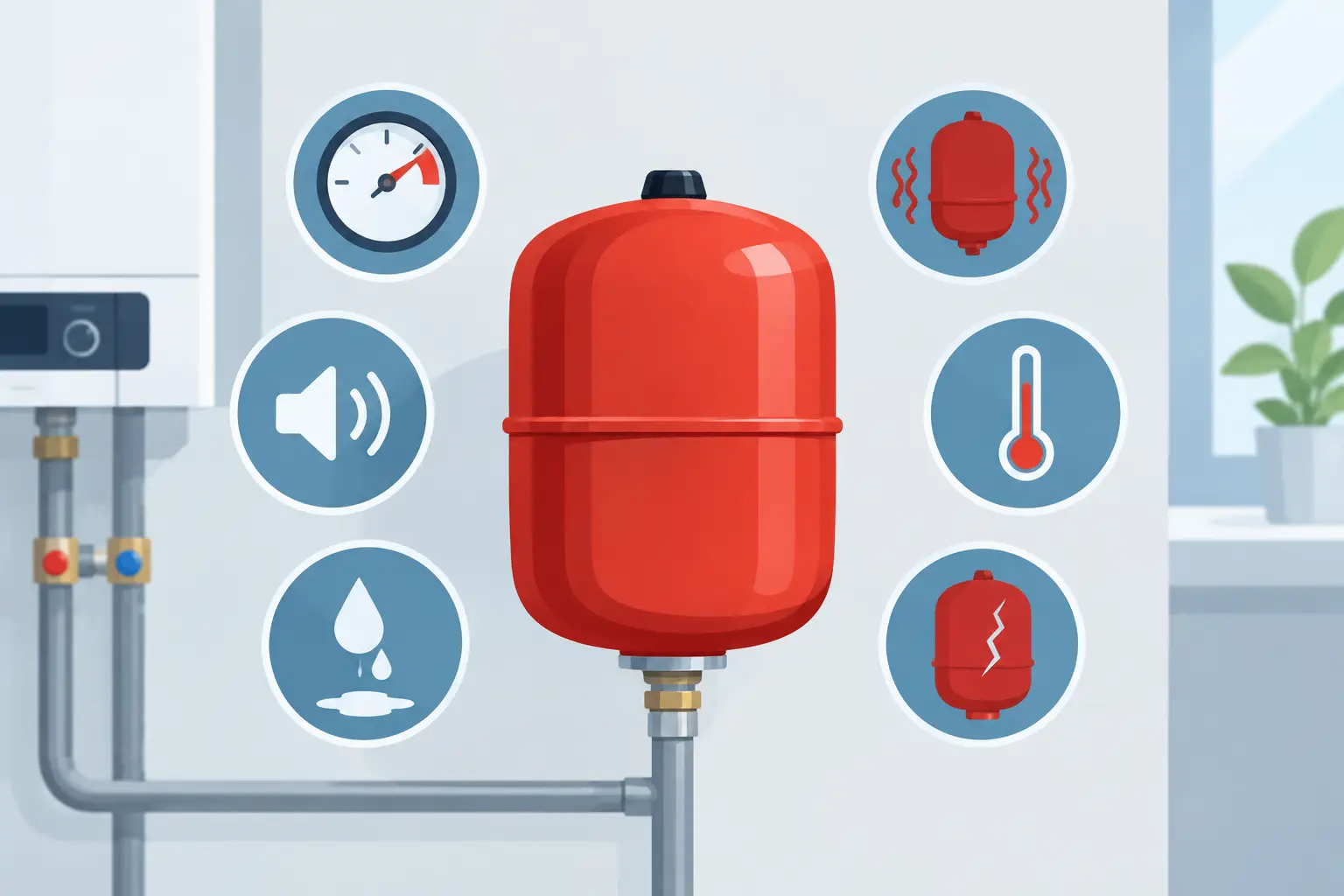
Do not guess, and do not leave a filling loop open. Overpressurising a system can cause water to discharge through the safety valve, while repeated pressure loss can point to a leak, a faulty expansion vessel or another issue that needs attention.
Restart the heating and test the results
Turn the heating back on and allow the radiators to warm up fully. Check each one from top to bottom. A properly working radiator should heat evenly, although the exact feel can vary with system temperature, radiator type and smart heating controls.
After the system has run, check the pressure gauge once more. A modest rise as the heating warms is normal. If the pressure climbs sharply, drops again after cooling, or the boiler displays a fault code, switch the heating off and arrange an inspection.
When You Should Not Bleed the Radiators Yourself
There are a few situations where a professional visit is the safer option. Stop and seek advice if water continues to leak from a bleed valve after it has been closed, if the valve is badly rusted, or if the radiator and surrounding pipework are very hot.
You should also avoid repeatedly bleeding the same radiator. Air should not continually build up in a closed heating system. Frequent air can indicate a small leak drawing air into the system, corrosion inside older pipework, incorrect system pressure or a fault with an automatic air vent.
For landlords and property managers, recurring cold spots should be investigated rather than treated as a routine tenant fix. A record of the pressure, affected rooms and any boiler messages gives an engineer a much clearer starting point.
If several radiators are cold at the bottom, discoloured water comes from the bleed valves, or rooms never heat evenly, the system may need cleaning, balancing or powerflushing. These are different jobs from releasing trapped air. A correct diagnosis prevents unnecessary work and helps protect the boiler, pump and controls.
A Note on Boilers, Heat Pumps and Older Systems
The radiator bleeding process is similar whether the heat source is a gas boiler or a heat pump, but the pressure and filling arrangements can differ. Do not remove a boiler casing, interfere with gas components or alter heat-pump settings to solve a radiator issue. Those tasks require a suitably qualified engineer.
Older open-vented systems may have a small feed-and-expansion tank, often in the loft, rather than a boiler pressure gauge. If the system has low water levels, overflow issues or persistent air locks, it is better to have the cause checked than keep opening radiator valves.
For households in Glasgow and the surrounding area, Chalmers Plumbing & Heating can assess recurring cold radiators, pressure loss and uneven heating as part of a broader system check. The aim is not simply to get heat into one room for a day, but to identify why the system is not circulating as it should.
A radiator that needs bleeding once in a while is common, especially after heating work or when the system has been drained. One that needs attention every few weeks is giving you useful information. Deal with that pattern early, and you are far less likely to be left with a cold room when the weather turns.