How to Improve Shower Pressure at Home

By Chalmers Plumbing & Heating

A shower that starts strongly then fades to a trickle is more than a morning annoyance. It can point to a simple blocked shower head, but it can also reveal a restriction in the hot-water supply, a poorly performing pump or an issue with the plumbing arrangement. The right way to improve shower pressure depends on whether the problem affects hot water, cold water or both.
Before buying a new shower or adding a pump, establish what has changed. A good diagnosis prevents money being spent on an upgrade that cannot solve the actual fault.
Pressure and flow are not the same thing
Most people describe a weak shower as low pressure, but low flow is often the real issue. Pressure is the force pushing water through the pipework. Flow is the amount of water that reaches the shower head each minute. A shower can have reasonable pressure at the pipe but poor flow because limescale, a blocked filter, a restrictive shower head or undersized pipework is limiting the water.
This distinction matters because a mains-fed combi boiler, a gravity-fed cylinder system and an unvented hot-water cylinder all behave differently. A solution that works well in one property may be unsuitable, or even prohibited, in another.
How to improve shower pressure safely
Start with the checks that are straightforward and low risk. They can make a surprising difference, particularly if the shower used to perform well.
Clean the shower head and hose
Remove the shower head and inspect the spray nozzles. In Glasgow and surrounding areas, mineral deposits can gradually narrow the openings, while small particles from pipework can collect in the head or hose. Soaking a removable shower head in a suitable descaling solution, then rinsing it thoroughly, may restore an even spray.
Check the hose at the same time. A kinked, internally damaged or narrow-bore hose can restrict flow. If the shower head has an economy setting, make sure it has not been switched to a reduced-flow mode by accident. Water-saving heads have their place, but some are too restrictive for an already low-pressure gravity-fed system.
Check that isolating valves are fully open
Shower valves, basin taps and some appliances may have small isolating valves on the pipework. If one is only partly open after previous work, the shower can be affected. Stop valves near the incoming mains supply can also be knocked or left partially closed.
Avoid forcing stiff valves. Older valves can seize, leak or fail when disturbed. If you find a valve that will not turn easily, it is better to have it checked than create a leak under a floor or behind a wall.
Look for a clear hot-versus-cold pattern
Run the cold side of the shower on its own, then the hot side, where the controls allow it. Try another hot tap, such as the kitchen sink or basin, as well. This simple comparison helps narrow down the cause:
- Weak hot and cold water at the shower may indicate the shower head, hose, mixer valve or local pipework.
- Strong cold water but weak hot water often points towards the boiler, hot-water cylinder, hot-water pipework or a blocked filter.
- Weak water at several outlets may be an incoming supply, stopcock or wider plumbing issue.
- A shower that is only weak when another tap is running may be reaching the limit of the available flow for the property.
Do not rely on the pressure gauge on a sealed central-heating system to judge shower performance. That gauge relates to the heating circuit, not the pressure of your domestic hot-water supply.
Check the shower valve before blaming the boiler
Thermostatic mixer showers contain filters, non-return valves and cartridges that can become blocked or worn. If the shower temperature has become difficult to control, or the flow is noticeably worse on one temperature setting, the mixer may need servicing or replacement.
This is especially common after plumbing work, a water-supply interruption or a boiler replacement, when debris can be disturbed in the pipework. A professional can isolate the supplies, inspect the filters and confirm whether a replacement cartridge is available. Replacing the whole shower without this check can be unnecessary.
An electric shower is different again. Its output is restricted by the amount of water it can heat safely. Turning the temperature control up usually reduces flow, because the unit allows less water through the heater. If an electric shower has suddenly become weak, it may have a blocked inlet filter, a supply restriction or an internal fault. Do not remove the cover or attempt electrical repairs yourself.
Understand the hot-water system in your property
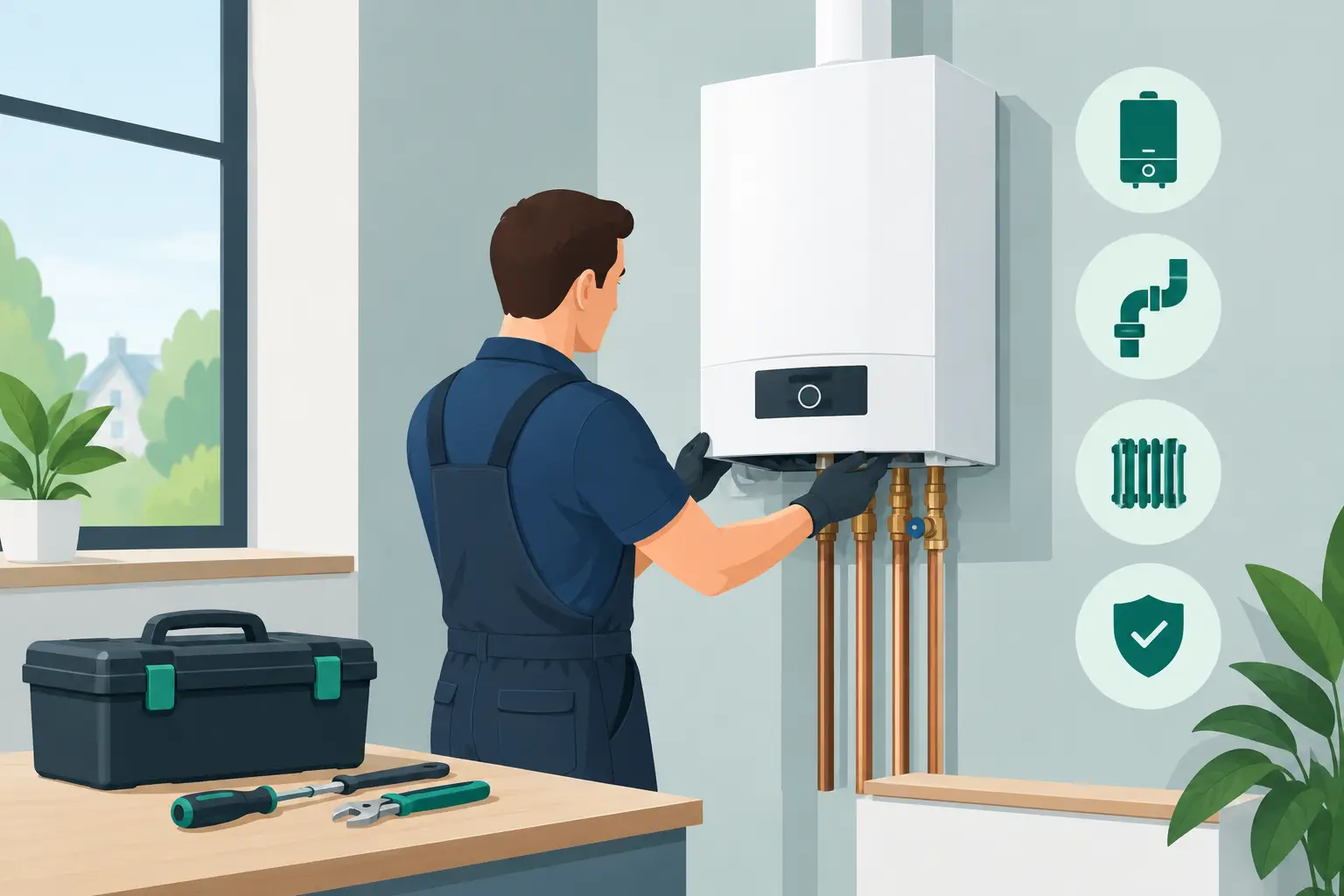
A combi boiler heats mains water as it passes through the appliance. If hot taps across the home have lost flow, possible causes include a partially closed inlet valve, a blocked cold-water inlet filter, scale or debris in a plate heat exchanger, or a problem with the boiler's domestic hot-water components. The boiler may still heat water, but not deliver enough flow for a comfortable shower.
A conventional system with a cold-water storage cistern and hot-water cylinder relies on gravity to create pressure. The height between the tank and shower makes a significant difference. A loft conversion, bathroom extension or relocated shower can leave too little head of water for a satisfying gravity-fed shower.
In this setup, a correctly selected shower pump can improve performance, but only where the system has adequate stored water and the pipework is configured properly. A pump must not be connected directly to the mains water supply. It needs suitable flow, correct electrical provision and appropriate plumbing connections, so this is a job for an experienced installer rather than a quick DIY addition.
Unvented cylinders are mains pressure systems and can provide excellent shower flow when designed and maintained correctly. If performance has dropped, an engineer should check the pressure-reducing valve, filters, expansion vessel and incoming supply rather than fitting a pump that is not needed.
Choose the fix that matches the cause
There is no single best way to improve shower pressure. A cleaned shower head may solve a localised problem for very little cost. A serviceable mixer cartridge can restore a shower where the rest of the home has good flow. A cylinder-and-pump upgrade may transform a gravity-fed system, while a combi boiler issue requires a different approach altogether.
For bathroom renovations, it is worth discussing shower performance before tiles are fitted and pipework is concealed. Pipe sizes, shower type, hot-water capacity and likely simultaneous demand all affect the finished result. A large rainfall head may look impressive, for example, but it needs sufficient water flow to work as intended. In a busy household, a system should also be assessed while other taps, appliances and showers may be in use.
Changing the shower head can be a sensible short-term measure, but it will not correct restricted hot-water flow or a failing boiler component. Likewise, increasing a boiler's heating pressure will not improve the shower and can create other faults.
When to arrange a professional inspection
Arrange a visit if the change was sudden, hot water is weak throughout the property, the boiler is showing a fault code, there is water leaking from the shower or boiler, or the shower temperature swings from hot to cold. Landlords and property managers should also act promptly where poor shower flow is affecting a tenant's reliable access to hot water.
A proper assessment should include checks of the incoming supply, valve positions, shower components, hot-water flow rate and the type of system serving the property. Where boiler work is involved, it should be completed by a Gas Safe-registered engineer using the correct parts and commissioning checks.
At Chalmers Plumbing & Heating, the aim is to explain what is restricting your shower, set out the practical options and carry out the work properly, whether the answer is a small repair or a wider system upgrade. A clear diagnosis gives you the best chance of starting the day with a shower that performs as it should.