Should I replace my boiler now or wait until it breaks?
How to tell whether your boiler needs replacing soon, and why planning it usually beats waiting for a breakdown.
By Chalmers Plumbing & Heating
If your boiler is safe, reliable and serviced every year, there's no need to replace it just because it's getting older. But if it's around 10 years old or more, breaking down more often, or getting harder to find parts for, planning a replacement before it fails is usually better than waiting until you're left without heating.
This post covers the signs it's time to start planning, why a planned replacement is easier than an emergency one, when keeping your current boiler makes sense, and what to think about first if you might sell or switch to a heat pump. If you ever smell gas, leave the boiler alone, open the windows and call the National Gas Emergency number on 0800 111 999.
Signs it's time to start planning
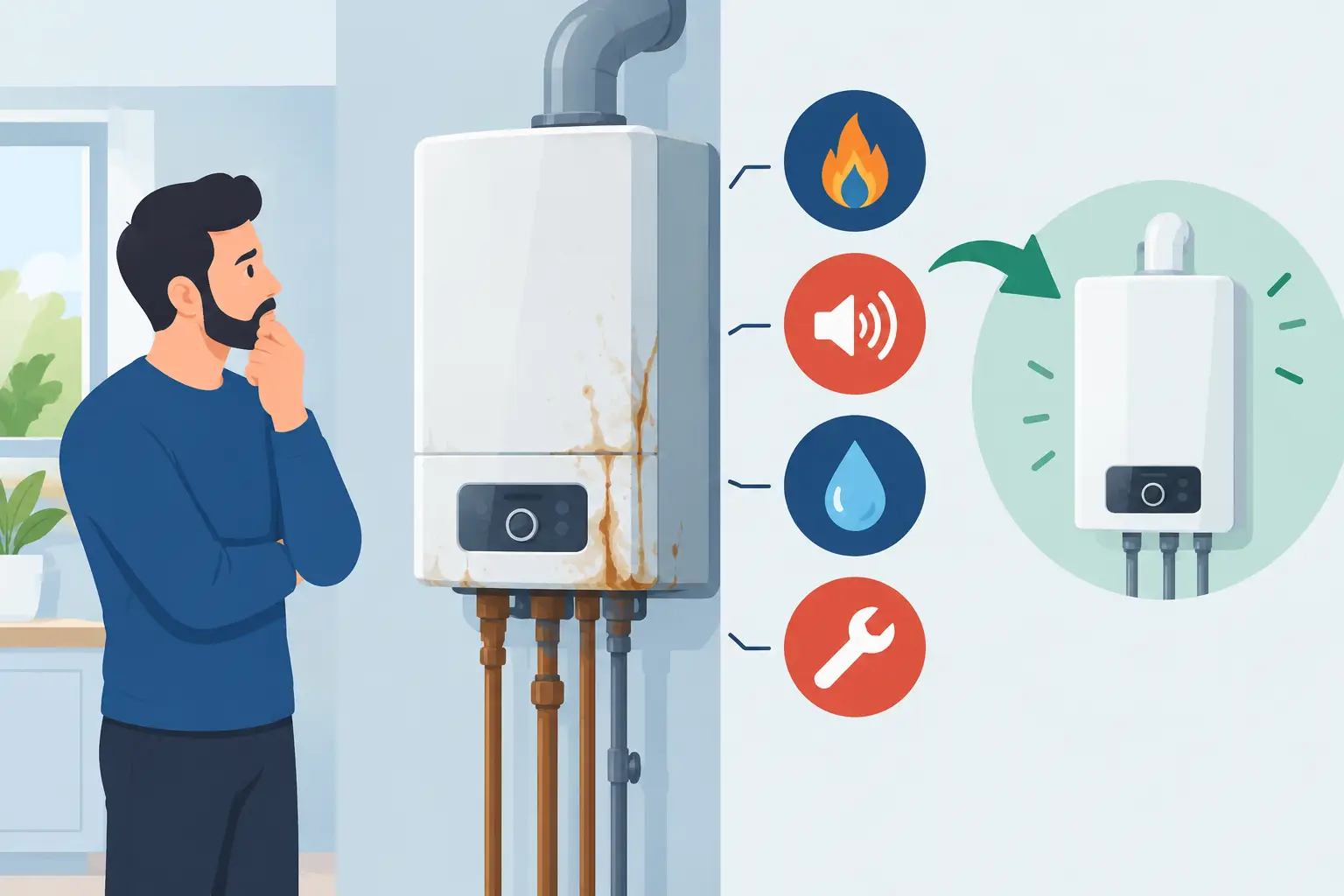
Most boilers last somewhere between 10 and 15 years with yearly servicing, but age alone isn't the deciding factor. These are the signs worth acting on:
it has broken down more than once in the last year or two
repairs keep coming, each one costing more than the last
your engineer has warned that parts are becoming hard to get
it leaks, loses pressure often or makes new noises such as banging or kettling (a rumbling, kettle-like sound caused by limescale or sludge)
heating bills have crept up while your use hasn't changed
there are sooty marks around the boiler, or a lazy yellow flame where there should be a crisp blue one
The last one is a safety warning, not just a sign of age. Stop using the boiler and have a Gas Safe registered engineer check it straight away. Our guide on whether to repair or replace your boiler goes into the repair side in more detail.
Why a planned replacement beats an emergency one
When a boiler fails without warning, especially in winter, the priority is getting heating and hot water back as quickly as possible. That can mean taking whichever boiler can be fitted soonest, with little time to compare options.
Planning ahead gives you room to:
have a proper survey, so the new boiler is sized for your home's heat loss and hot water use rather than guessed
decide whether to stay with the same type or switch, for example from a system with a hot water cylinder to a combi
sort out problems in the wider system, such as sludge in the radiators or old controls, at the same time
choose a date that suits you, rather than spending days without heating
Is there a best time of year?
Spring and summer are usually the easiest time to replace a boiler. The heating is off, so a day or two of work causes less disruption, and you're not under pressure to make a quick decision.
That doesn't mean waiting until summer if the boiler is unsafe or failing. But if yours is ageing and you've noticed some of the signs above, deciding over the winter and booking the work for when the weather warms up is a sensible plan.
When keeping your current boiler makes sense
Replacing a boiler that still works well isn't always the best use of money. If it's serviced every year, rarely breaks down and parts are still available, it may have plenty of life left.
In that case, smaller changes can improve comfort and running costs for much less:
better heating controls, such as a programmable or smart thermostat
thermostatic radiator valves (TRVs), which let each room run at its own temperature
a lower flow temperature, the temperature of the water the boiler sends round the radiators, so a condensing boiler runs more efficiently
a magnetic filter, which catches sludge before it reaches the boiler
Our post on the best boiler efficiency upgrades explains each of these in more depth.
Thinking about a heat pump first?
If you're planning a renovation, an extension or new insulation, it's worth deciding whether your next heating system should be a gas boiler or a heat pump before the old boiler fails. A heat pump needs more planning, including a room-by-room heat loss check and space for a hot water cylinder, so it's hard to arrange in a hurry. Our guide to heat pumps versus gas boilers compares the two. Home Energy Scotland can also advise on any funding available for low carbon heating.
Selling your home soon?
If you're planning to sell, a boiler near the end of its life is something buyers and their surveyors often ask about. Whether you replace it first or not, keep its paperwork together: the service history and, for a new boiler, the commissioning and registration documents. A boiler with a clear record is easier to explain than one with none.
How we plan a boiler replacement
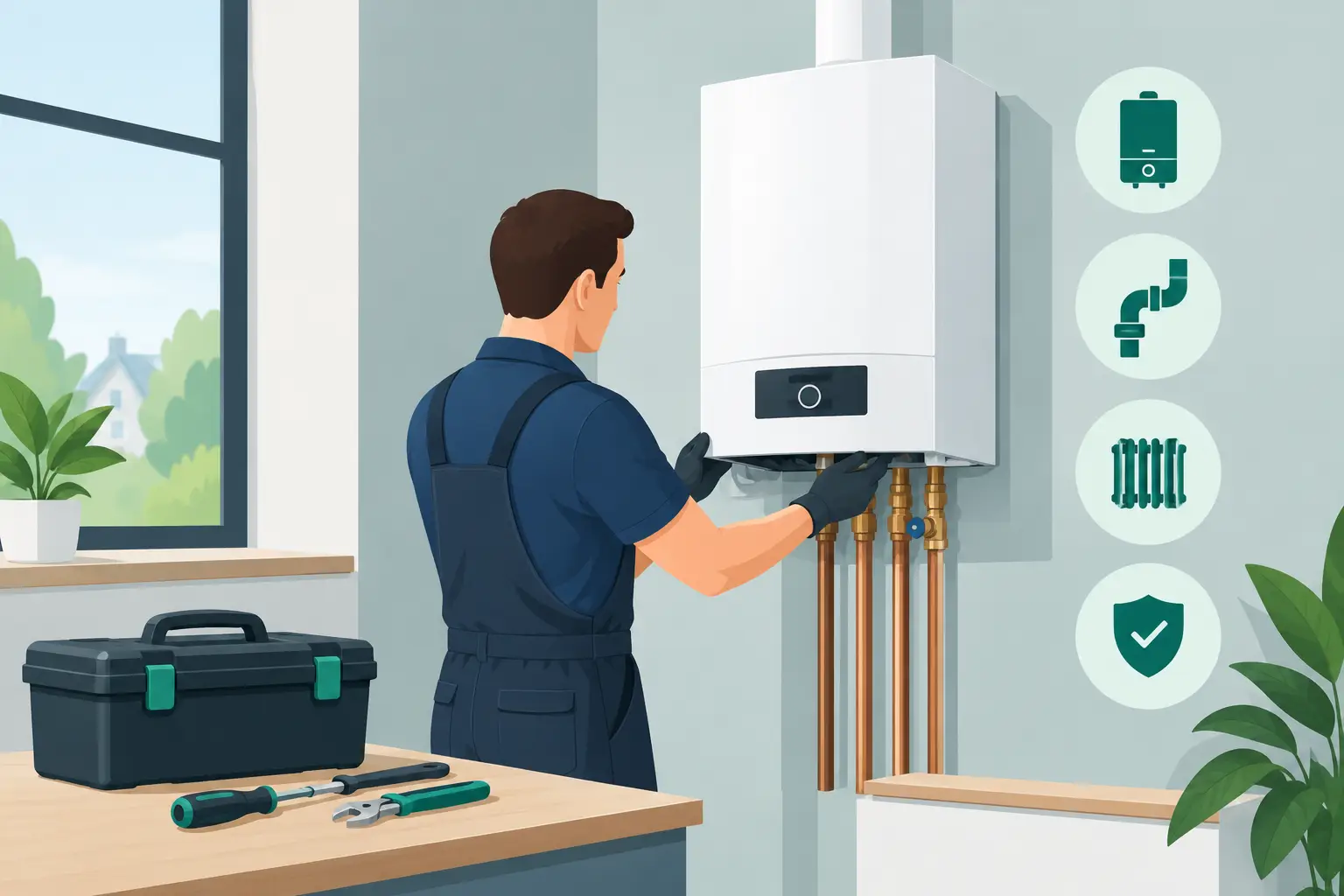
Our Gas Safe registered engineers start with a site survey, checking the pipe runs, flue options, cylinder type and insulation, along with a heat loss and hot water demand check, so the new boiler is sized correctly. We're Worcester Bosch accredited and Viessmann trained, and we register each new boiler with its manufacturer so the warranty stays valid.
If your boiler is showing its age, Chalmers Plumbing & Heating can survey your home and talk you through whether to replace it now, later or not at all. Find out more about our boiler installation service in Glasgow and the surrounding area.