If you are forever topping up your boiler pressure only to see the gauge sink again, something is not quite right. A small pressure change as your heating runs is normal, but a regular drop points to a fault that needs attention.
What normal boiler pressure looks like
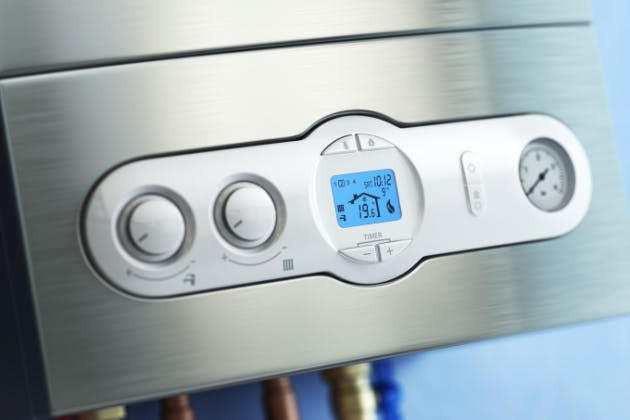
Most modern combi and system boilers work best between 1.0 and 1.5 bar when the system is cold. You will usually see this marked in green on the pressure gauge, often on the front of the boiler or underneath.
When the heating comes on and the water heats up, the pressure will rise slightly, often to somewhere between 1.8 and 2.0 bar. This small increase is expected, as hot water expands and takes up more space in the system.
If your pressure climbs close to 3 bar when hot, or drops below 1 bar when cold, your system is outside its ideal range. Repeatedly needing to top up from below 1 bar is a clear sign of a problem rather than day to day fluctuation.
One off pressure top up vs ongoing pressure loss
Many households will need to top up their boiler pressure once in a while, for example after radiator maintenance. If the pressure then stays stable over the following weeks, there is usually nothing to worry about.
Ongoing pressure loss is different. If you notice the gauge dropping every few days, or even daily, there will be a fault in the system such as a leak, faulty component or filling loop issue that needs investigating.
It can help to keep a simple note of:
The cold pressure in the morning
The hot pressure after the heating has been on
How often you have to top up
Whether it drops more when the heating is running or when it is off overnight
This quick record can make it easier for you and any engineer to spot patterns and narrow down the cause.
Common reasons boiler pressure keeps dropping
Small leaks on radiators, valves and pipework
The most frequent cause of pressure loss is a slow water leak somewhere on the heating system. This might be a weeping radiator valve, a corroded joint under a floor or a slightly loose connection on a towel rail.
Because these leaks are often very small, you may not see obvious drips. Instead, look for telltale signs such as rusty marks, green staining on copper pipework or slightly warped flooring near pipes.
Pressure relief valve discharging outside
Your boiler has a safety device called a pressure relief valve (PRV) that releases water if the pressure gets too high. The water usually exits through a copper pipe that points outside, often near the boiler location.
If this valve is faulty, or the system is regularly over-pressurising, it can slowly discharge water and cause the pressure to drop. Check the end of the external discharge pipe for signs of dampness or staining on the wall below.
Faulty or flat expansion vessel
An expansion vessel absorbs the natural expansion of water as it heats up. If the air charge inside it is lost or the vessel fails, the system pressure can swing up when hot and then drop too low again when cool.
Symptoms of a failed expansion vessel include pressure rising close to 3 bar, the PRV dripping, and then the cold pressure falling below normal afterwards. An engineer can test and recharge or replace the vessel safely.
Filling loop left open
The filling loop is what you use to add water to a pressurised boiler. On many combi boilers this is a flexible braided hose with one or two small valves that you open briefly to top up.
If one of these valves is left slightly open, it can cause the system to overfill, trigger the PRV and then lose pressure again. After topping up, always double check both ends of the loop are fully closed, or have an engineer remove a temporary loop if it is no longer needed.
Recently bled radiators
Bleeding radiators to remove trapped air is good practice, but each time you release air you may also lose a little pressure. If you have bled several radiators, it is quite normal to need a one off top up afterwards.
However, if the pressure continues to fall in the days after bleeding, there is likely to be another underlying cause that should be checked.
System corrosion and sludge
Older systems can suffer from internal corrosion and sludge build up. Over time this can eat away at metal pipework and radiators, creating pinhole leaks that are hard to spot but steadily lose water and pressure.
Signs include cold spots on radiators, brown or black water when bleeding, and noisy heating. Treating corrosion and cleaning the system helps stop further damage and can improve efficiency.
Homeowner checklist before calling an engineer
There are a few simple visual checks you can carry out safely before booking a repair. Do not remove boiler covers or touch internal components; leave that to a Gas Safe registered engineer.
Inspect visible radiator valves, tails and nearby pipework for dampness, staining or rust
Check under the boiler and along accessible pipes for any signs of drips or water marks
Look at the outside discharge pipe from the boiler to see if it is wet or has white limescale marks
Note when pressure drops most: overnight when the heating is off, or while the heating is running
Confirm the filling loop valves are firmly closed after any top ups
If you find any wet areas near electrical components, controls or the boiler casing, turn the system off and contact an engineer straight away.
Safe boiler repressurising and when to stop
Most modern boilers can be repressurised by carefully opening the filling loop and watching the gauge rise to around 1.2 to 1.5 bar when cold. If your heating company has a repressurising guide, follow that, or refer to your boiler manual for the manufacturer’s instructions.
When topping up, do it slowly and never exceed the recommended pressure. Once you reach the correct level, close the valves fully and run the heating to check for normal operation.
Stop topping up and arrange a boiler repair if you notice any of the following:
Pressure dropping rapidly within hours, needing to be topped up more than once a month, visible leaks or damp around the boiler, or any water near electrics. Repeatedly adding fresh water introduces more oxygen, which can accelerate corrosion, so it is better to fix the cause than to keep topping up.
Next steps and booking a boiler repair
If your boiler pressure keeps dropping, it is almost always a sign that something in the system needs attention. Catching issues early can prevent bigger breakdowns, protect your boiler and keep your heating running efficiently.
An experienced engineer can trace hidden leaks, test and replace faulty parts like the expansion vessel or PRV, and advise on ongoing boiler servicing to reduce future problems. They can also check that your boiler is safe and operating within the correct pressure range.
For professional help with ongoing pressure loss or any heating concern, contact Chalmers Plumbing & Heating to book a boiler repair on 01413740274. A prompt visit from a qualified engineer can get to the root of the issue and give you confidence in your heating again.