Radiator cold at the top or making gurgling noises is usually a sign of trapped air in the system. Bleeding a radiator is a simple job for most homeowners, as long as you follow a safe, step‑by‑step process and know when it is better to stop and call a professional.
What bleeding a radiator does
Bleeding a radiator means releasing trapped air from the top of the radiator using a bleed valve. When air collects inside, hot water cannot circulate properly, so the radiator feels cold at the top and warm at the bottom.
Once the air is released, hot water can fill the whole radiator again. This helps your heating run more efficiently, warms rooms faster and can reduce annoying banging or gurgling noises in the pipework.
Safety checks before you start
Before you touch any valves, take a minute to check it is safe to go ahead. Rushing into it can lead to scalds or pressure problems with the boiler.
Use this quick checklist before bleeding any radiator:
Turn the heating off and let radiators cool so you do not get burned by hot water
Check the boiler pressure gauge is within the normal range (usually around 1 to 1.5 bar when cold)
Have the right tools: a radiator bleed key, an old towel and a small container to catch water
Know your system type: if you are unsure whether it is sealed or open vented, treat it with extra caution
If you are not confident with any of these steps, it is safer to call a heating engineer rather than risk damaging the system.
How to bleed a radiator step by step
Follow these steps in order to safely bleed a radiator and avoid over‑releasing water or dropping system pressure too far.
1. Turn the heating off and let radiators cool
Switch your heating off at the programmer or thermostat and wait until the system has cooled down. This protects you from hot water and lets air and water settle, which makes bleeding more effective.
Bleeding radiators with the heating running can also drag more air into the system, so always do it with everything off.
2. Identify which radiators need bleeding
Feel each radiator from bottom to top. If it is hot at the bottom and noticeably cooler at the top, it likely has trapped air and needs bleeding.
Radiators that are cold all over, or cold at the bottom and warmer at the top, usually have a different issue such as sludge build‑up or a circulation problem rather than trapped air.
3. Protect flooring and locate the bleed valve
Place an old towel or cloth under the bleed valve and have a small jug, cup or container ready. You only expect a small amount of water, but it is best not to risk staining carpets or flooring.
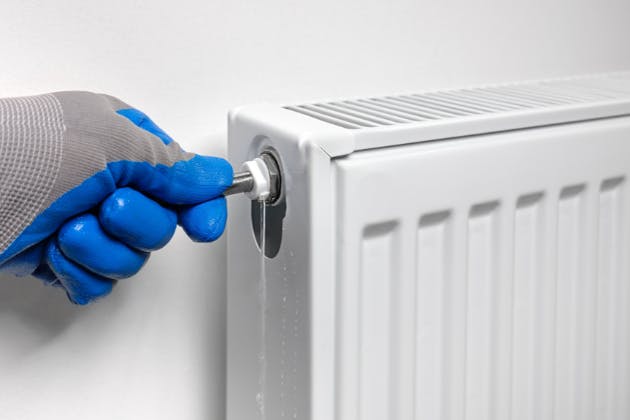
The bleed valve is usually a small square or slot‑headed fitting at the top corner of the radiator. Most modern radiators use a square key, older ones may use a flat screwdriver.
4. Insert the bleed key and turn slowly
Fit the radiator key snugly onto the bleed valve. Turn the key anti‑clockwise very slowly, no more than a quarter to half a turn at first.
You should hear a gentle hissing sound as air starts to escape. Keep your container just under the valve outlet to catch any drips.
5. Let air out until water flows steadily
Keep the valve open while you hear a clear hiss of air. As soon as you see water start to come out in a steady stream, the air has gone.
Once the flow is smooth, close the valve by turning the key clockwise until it is snug. Do not overtighten, as that can damage the valve.
6. Wipe up and repeat on other radiators
Use the towel to wipe away any drips and check the valve for leaks. If you have several radiators to bleed, move around the house and repeat the process as needed.
Many engineers prefer to start with the radiators furthest from the boiler and work their way back, as this can help restore balanced circulation.
7. Check boiler pressure and repressurise if needed
After bleeding, go back to your boiler and check the pressure gauge. On most sealed systems, the correct pressure when cold is around 1 to 1.5 bar, but always check your boiler manual.
If the pressure has dropped below the recommended range, you may need to top it up using the filling loop under the boiler. Open the filling valves gently until the gauge reaches the correct level, then close them firmly and restart the heating.
Troubleshooting common radiator problems
Even when you follow the steps correctly, a few issues can crop up. Knowing what they mean can help you decide when to keep going and when to stop.
Radiator cold at the top only
If the top is cold and the bottom is hot, it almost always means there is trapped air. Bleeding should cure this in one or two goes.
If the same radiator keeps getting cold at the top every few weeks, it suggests a deeper problem such as corrosion, a design issue or a small leak introducing air.
Radiator gurgling or making sloshing noises
Gurgling, sloshing or trickling sounds are usually air moving around the system. Bleeding the affected radiators often reduces the noise significantly.
If the gurgling returns quickly, or you hear constant hissing near valves or the boiler, stop and get a heating engineer to inspect the system.
Bleed screw will not budge
If the bleed valve is stuck, do not force it with pliers as you can snap the valve or twist it out of the radiator, leading to a serious leak.
Try a firm but gentle pressure with the correct key. If it still will not move, leave it and book an engineer to replace the valve safely.
When you should not bleed or DIY
Bleeding is simple, but there are times when it is safer to leave it alone and get professional help. Ignoring warning signs can lead to leaks, boiler lockouts or damage to the system.
Stop and call a heating engineer if you notice any of the following:
The same radiators need bleeding again and again
Water coming out of the bleed valve is very brown or black, or contains sludge
The boiler pressure keeps dropping even after you top it up
You hear hissing, whistling or dripping from valves or pipe joints
You have a sealed system and are not confident about topping up pressure
Dark, sludgy water suggests corrosion and sludge build‑up. This is often better treated with a professional powerflushing service rather than repeated bleeding.
After bleeding: balancing and next steps
Once you have bled all the radiators, turn the heating back on and let everything heat up fully. Check each radiator again for cold spots and note any that still heat up much more slowly than the others.
Balancing radiators involves adjusting the lockshield valves so heat is shared more evenly around the house. It can be fiddly and involves working with very hot pipework, so many homeowners prefer to have an engineer do it as part of a system check.
If your boiler is due a check, it can be a good time to arrange boiler servicing and ask the engineer to balance the system and inspect for air or sludge issues.
When to call Chalmers Plumbing & Heating
If one radiator needed a quick bleed and everything is now hot and quiet, you have probably solved the problem. But if several rooms are affected, radiators keep needing bleeding, or the water looks dirty, there is likely a deeper fault that bleeding alone will not fix.
Chalmers Plumbing & Heating can investigate ongoing air and circulation problems, recommend solutions such as central heating upgrades or targeted boiler repairs, and carry out professional powerflushing where needed.
For friendly, expert help with radiators that never seem quite right, call Chalmers Plumbing & Heating on 01413740274 to book a heating engineer and get your home warming up properly again.